
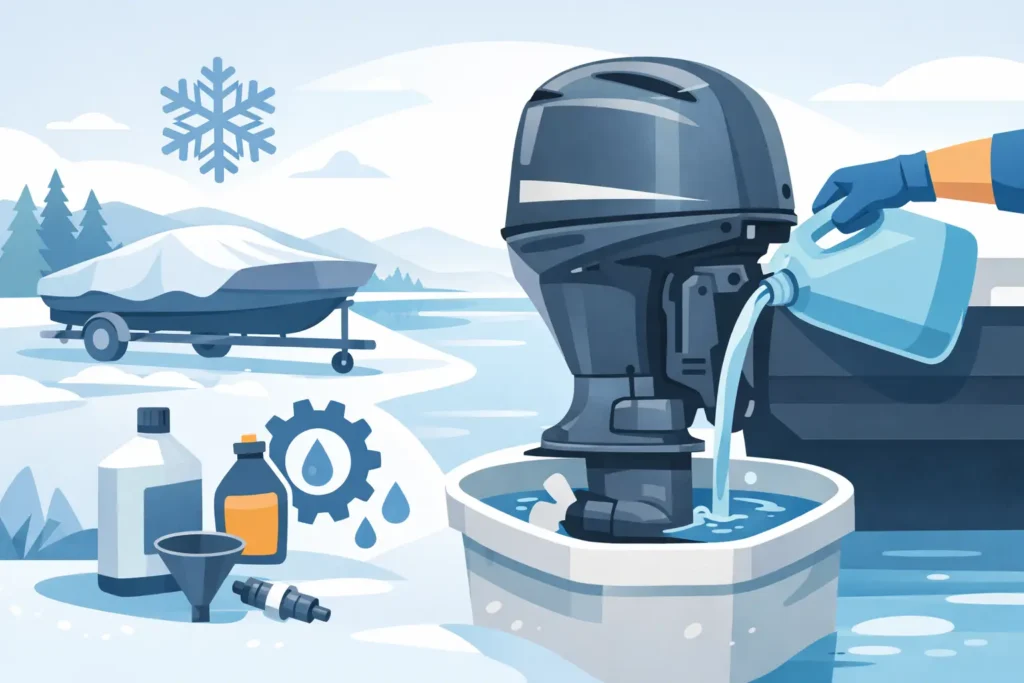
That first hard freeze can get expensive fast if your outboard is still sitting with old fuel, trapped water, and worn gear lube. If you are looking up how to winterize Yamaha outboard motor care before storage, the goal is simple – protect the engine now so you are not paying for avoidable repairs when spring arrives.
For most Yamaha owners, winterizing is not complicated, but it does need to be done in the right order. Fuel, cooling passages, lower unit oil, cylinders, battery, and corrosion protection all matter. Miss one step and you can end up with varnished injectors, cracked components, internal rust, or a lower unit that took on water and sat all winter.
How to winterize Yamaha outboard motor step by step
The exact process depends on whether you have a carbureted 2-stroke, HPDI, or Yamaha 4-stroke outboard. Storage length matters too. A few weeks in mild weather is different from several months in freezing conditions. Still, the core job stays the same – stabilize fuel, flush the motor, protect internal parts, and store it in a position that lets water drain completely.
Before you start, gather fresh fuel stabilizer, marine fogging oil if your model calls for it, Yamaha-compatible 4-stroke engine oil and filter if you are doing a service interval, lower unit gear lube, grease, corrosion protectant, and basic hand tools. If your engine is due for annual maintenance anyway, combine that work with winterizing so you are not doubling labor.
Start with the fuel system
Fuel problems are one of the biggest reasons an outboard runs rough after storage. Ethanol-blended gas can absorb moisture and break down faster than many owners expect. That is why the first move is treating the fuel before the engine sits.
Add marine fuel stabilizer to the tank using the product dosage instructions. After that, run the engine long enough for treated fuel to move through the entire system. On many Yamaha outboards, 10 to 15 minutes on a flush attachment is enough to circulate stabilized fuel through injectors, rails, pumps, or carburetors.
Some owners prefer to store with a nearly full tank to reduce condensation. Others want less fuel on hand during long storage. The better answer depends on your setup. A portable tank is easier to manage differently than a built-in boat tank. If your tank stays in the boat all winter, a full tank with stabilizer usually helps reduce moisture space inside the tank.
Flush the cooling system fully
Salt, silt, and mineral deposits should not sit inside the motor for months. Flush the outboard with fresh water using the proper flush port or earmuffs, depending on your Yamaha model. Keep a steady water supply and do not rev the engine while flushing on muffs.
Let the engine reach normal operating temperature if possible. That helps the thermostats open and clears more of the cooling passages. After flushing, shut the engine down and let all water drain. This part matters more than many people realize. Storage angle affects drainage, so keep the motor in the normal vertical running position, not trimmed up.
Change engine oil if you have a Yamaha 4-stroke
If you own a Yamaha 4-stroke and the oil has hours on it, change it before storage instead of after winter. Used oil can hold contaminants and acids that are better out of the engine during long layup. Replace the oil filter at the same time and refill with the correct grade for your model.
This is one of those it-depends steps. If you changed the oil very recently and only put minimal time on the engine, some owners wait until spring. But for most boats that are being put away for the season, fresh oil before storage is the safer move.
Check and replace lower unit gear lube
Lower unit service is not optional if you want to avoid expensive gearcase damage. Drain the gear lube and inspect it closely. Clean, dark oil is one thing. Milky oil means water intrusion, and that needs attention before the unit sits through freezing weather.
If water has entered through a seal, winter can make the problem worse. Refill with fresh marine gear lube and use new sealing washers where required. If you see metal shavings beyond a light paste on the magnetic drain screw, that is a sign to stop and inspect further rather than just topping it off and hoping for the best.
Protect the powerhead for winter storage
Internal corrosion can start quietly and show up later as low compression, stuck rings, or rough starting. The right storage prep helps prevent that.
Fogging and cylinder protection
Older carbureted Yamaha outboards are often fogged through the intake while running, then shut down as the fogging oil coats internal surfaces. Some EFI and modern 4-stroke models require a different method, and over-fogging certain systems can create issues. Always follow your owner manual or service guidance for your exact engine family.
If your model calls for direct cylinder fogging, remove spark plugs, apply the specified fogging oil amount, and rotate the engine as directed before reinstalling or replacing plugs. This step is especially useful for engines that will sit several months in damp conditions.
Spray external corrosion protection
Once the powerhead is cool, inspect for salt residue, loose clamps, chafed hoses, and damaged wiring insulation. Then apply a corrosion protectant to external metal surfaces, avoiding belts, air intakes, and electrical connection points where the product should not be used.
For saltwater operators, this step is cheap insurance. Even in storage, leftover salt and humid air keep working against aluminum and steel parts.
Grease the moving points
Grease fittings, steering pivots, swivel brackets, and prop shaft splines with marine grease if service is due. Stiff steering in spring often traces back to neglect here, not just old cables. Pulling the prop also gives you a chance to check for fishing line around the shaft seal, which can let water into the lower unit.
If you find line wrapped behind the prop, remove it now and inspect carefully. That small issue can turn into a seal repair and contaminated gear lube if it goes unnoticed.
Battery, prop, and storage position
A dead battery in spring is annoying. A frozen battery can be ruined.
Remove the battery if the boat will be stored where temperatures drop hard, or at minimum disconnect it and keep it on a quality marine charger or maintainer. Clean the terminals and make sure the battery is fully charged before storage. Lead-acid batteries handle winter much better when fully charged than when left discharged.
With the prop removed, inspect for dings, spun hub symptoms, and shaft damage. You do not have to replace every prop with a cosmetic nick, but winter is a good time to handle repairs before the next launch window gets busy.
Store the outboard in the full down position so water drains from the exhaust hub, gearcase areas, and cooling passages as designed. Leaving the motor tilted up through freezing weather is one of the easiest ways to invite trapped water problems.
Common mistakes when winterizing a Yamaha outboard
Most winter damage comes from a short list of avoidable mistakes. Owners either skip fuel treatment, forget the lower unit, leave the engine tilted up, or assume a quick flush is enough. Another common issue is running the engine on muffs without adequate water pressure and thinking the cooling system was fully flushed when it was not.
There is also the question of whether to do the work yourself or pay for service. If you are comfortable changing oil, gear lube, and plugs, DIY winterizing can save money. If you are storing a high-horsepower Yamaha 4-stroke with digital controls or you already suspect seal, fuel, or electrical issues, a service appointment may cost less than guessing wrong. For buyers shopping replacement power, Yamaha Motor Shop keeps multiple horsepower options available, including popular 115 HP to 250 HP ranges, but proper off-season care is still the cheaper move than replacing a damaged engine early.
When winterizing is not enough
Winterizing protects a healthy motor. It does not fix an engine that already has water in the gearcase, weak compression, fuel system varnish, or charging problems. If your Yamaha was hard starting, overheating, or showing warning alarms before storage, handle that now instead of pushing the problem into next season.
That matters even more with used outboards or engines that changed hands recently. A motor can look clean outside and still need seals, impeller service, injector cleaning, or thermostat replacement. Winter prep is the right time to inspect those risk points while the boat is already out of service.
A careful winter routine does more than prevent damage. It gives you a better shot at turning the key in spring and getting straight back on the water instead of straight into repair bills.