
If you are ordering parts, checking year range, confirming horsepower, or trying to verify what engine is actually on the transom, you need to know how to read Yamaha outboard motor serial number details the right way. One wrong digit can send you toward the wrong water pump kit, the wrong lower unit parts, or a bad buying decision on a used motor.
For most buyers and boat owners, the first thing to clear up is this – Yamaha identification is not always as simple as finding one number and calling it done. On many Yamaha outboards, you will usually work from the model code and the serial number together. The serial number identifies the individual engine, while the model information tells you the family, horsepower class, shaft setup, and other build details that matter when you are buying parts or comparing inventory.
Where to find the Yamaha outboard ID tag
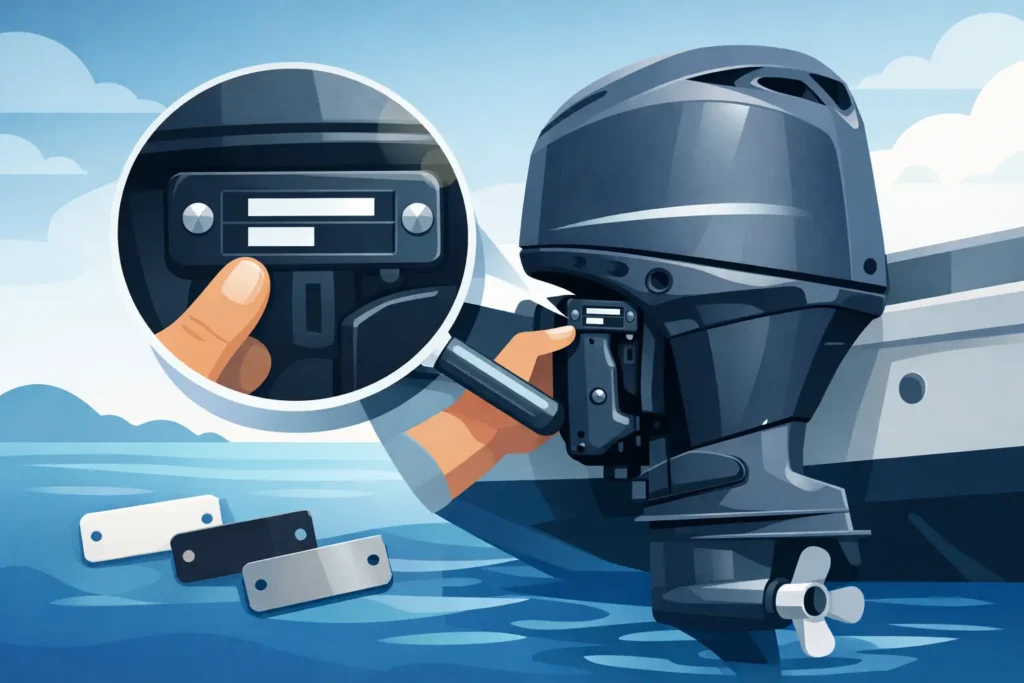
The ID information is usually on a plate or sticker attached to the outboard bracket. On many Yamaha models, you will find it on the port side of the clamp bracket, though location can vary by year and series. If the engine has been repainted, repaired, or heavily used in saltwater, the tag may be harder to read than it should be.
Look for a metal plate or printed label that includes model information and a serial number. Clean the area first with a rag so you do not confuse corrosion, paint chips, or dirt with stamped characters. A phone flashlight helps, especially on older used motors where the tag has faded.
If you cannot find the bracket tag, inspect the swivel bracket and inner transom area carefully. Some owners assume the cowling decals are enough, but decals only tell you broad horsepower branding. They do not give you the exact identification you need for parts ordering or resale verification.
How to read Yamaha outboard motor serial number correctly
The biggest mistake is trying to decode the serial number by itself without reading the whole tag. Yamaha outboards commonly show both a model code and a serial number. The model code often appears first, and the serial number is listed separately. You need both because the model code explains what the engine is, and the serial number confirms the individual unit.
A typical Yamaha outboard ID tag may include these fields:
- Model
- Serial
- Approved code or emissions information
- Manufacturing or market-related markings
The serial number itself is usually a string of letters and numbers. Depending on the engine, it may start with a prefix and then continue with a series of digits. The exact format can vary by production period, horsepower range, and market version, which is why there is no one universal chart that works perfectly for every Yamaha ever built.
That is the trade-off. People want a simple year-by-number decoder, but Yamaha identification often depends more on matching the full model designation than guessing a year from the serial alone.
Read the model code first, then the serial number
If your goal is parts, service, or replacement planning, start with the model code. This usually carries more usable information than the serial number by itself. For example, the model code can indicate the engine family, shaft length, trim configuration, start type, and revision version.
After that, record the serial number exactly as shown. Do not drop prefixes, spaces, or leading zeros. Those small details matter when checking service records, warranty status, production changes, or fitment. If a seller sends you a blurry photo and one character is unclear, ask for another image before you spend money.
This matters even more when buying used. Two Yamaha 150 HP outboards can look nearly identical from the outside and still use different components based on production series. That is where the tag earns its value.
What the serial number can and cannot tell you
The serial number helps identify a specific engine. It can be used to verify the motor for registration, service records, theft checks, and some dealer-level lookups. It is also useful when comparing what a seller claims versus what is actually on the engine.
What it does not always do is give you an easy consumer-facing breakdown of year, shaft, and equipment from the digits alone. On many Yamaha outboards, those details are better confirmed through the model code and manufacturer reference data. So if you are asking, “Can I decode everything from the serial number only?” the honest answer is usually no.
That is not bad design. It just means Yamaha identification is more precise when read as a full tag, not as a single number.
How to avoid common reading mistakes
Characters on older tags are often misread. The most common mix-ups are 0 and O, 1 and I, 5 and S, and 8 and B. Salt exposure, faded print, and scratched plates make this worse. Before you place an order or list a motor for sale, verify every character twice.
It also helps to photograph the tag straight on instead of at an angle. Reflection can make letters look stamped when they are printed, or hide the difference between similar characters. If the plate is badly damaged, write down what you can still read and compare it against known Yamaha model naming patterns.
Another mistake is assuming the engine year from the boat year. Boats and motors are often sold together, but they are not always the same year. Repowers are common, especially on fishing boats, bay boats, and commercial setups. Always trust the outboard tag over the trailer title, hull paperwork, or seller memory.
Why buyers should check the serial number before purchasing
If you are shopping for a used Yamaha outboard, checking the ID tag is not optional. It helps you confirm that the horsepower on the decals matches the actual motor family. It also gives you a better way to verify whether replacement parts, rigging components, or service history make sense for that engine.
This is especially useful in popular ranges like 115 HP, 150 HP, 175 HP, 200 HP, 225 HP, and 250 HP, where buyers often compare several listings at once. Engines can look similar across these categories, and sellers do not always list the full identification clearly. A clean serial and model tag gives you more confidence before you buy.
If the tag is missing, damaged beyond reading, or looks tampered with, pause the deal. There may be a legitimate explanation, but there is also more risk. That risk gets expensive fast when the motor needs parts, registration review, or resale documentation later.
How to read Yamaha outboard motor serial number for parts orders
When ordering parts, write down the model code and serial number exactly as shown on the tag and keep a photo on your phone. That saves time when you are comparing listings, talking with a seller, or confirming fitment for maintenance items.
For routine service parts like impellers, thermostats, fuel filters, and anodes, the correct model family is often the key match point. For revision-specific components, the serial number range may matter more. That is why parts questions often start with, “What is your full model and serial?”
If you are buying a replacement outboard instead of parts, this same habit helps you compare engines more accurately. A motor that looks like a bargain can turn into extra cost if its exact configuration does not match your rigging, controls, shaft length, or intended use.
When the tag is missing or unreadable
A missing tag does not automatically mean the motor is bad, but it does reduce certainty. On a hard-used commercial engine or an older saltwater motor, labels can be destroyed over time. Still, you should treat missing ID information as a pricing issue and a due-diligence issue.
Ask for any registration paperwork, prior service invoices, or original purchase records that show the full engine identification. If the seller cannot provide them, assume you may face more work confirming fitment and ownership details later. That does not always kill the deal, but it should affect what you are willing to pay.
For serious buyers, the smart move is simple – verify before purchase, not after delivery. That is especially true when you are shopping inventory online and trying to move fast on price. At Yamaha Motor Shop, buyers looking at available outboards should still confirm exact engine identification whenever comparing used stock, replacement options, or horsepower upgrades.
A practical way to record the number
Use your phone and capture three photos: one wide shot showing the motor on the boat, one medium shot showing the bracket area, and one close-up of the ID tag. Then type the model and serial number into your notes app exactly as shown. This gives you a clean reference when talking to a seller, mechanic, or parts counter.
That extra two minutes can save you from ordering the wrong parts, misunderstanding the engine setup, or buying a motor that is not what the listing claims. When the numbers are clear, the whole deal gets easier.
If you are staring at a Yamaha tag and trying to figure out what matters most, start with this rule: read the full ID plate, not just one line. That small habit gives you a better shot at buying right, ordering right, and keeping your boat on the water instead of in the shop.