
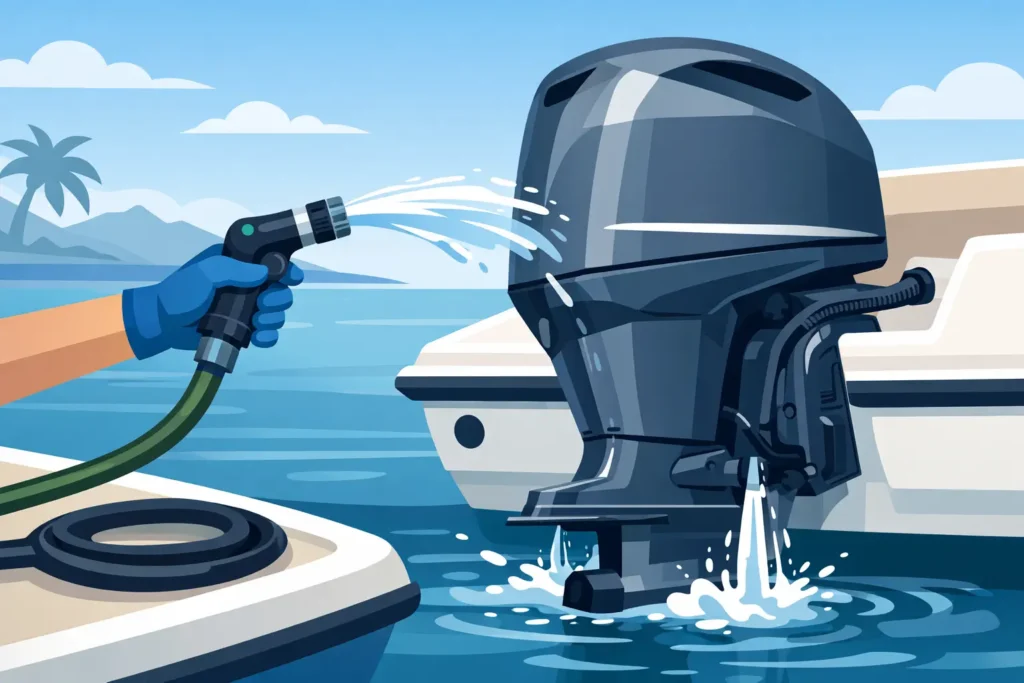
Salt dries fast, scale builds faster, and an outboard that is not flushed regularly can start showing it in idle quality, cooling performance, and long-term corrosion. If you are looking up how to flush Yamaha outboard motor systems the right way, the good news is that the job is simple, quick, and worth doing after every saltwater run.
For most Yamaha outboards, flushing is basic maintenance, not optional extra care. It helps clear salt, sand, silt, and debris from the cooling passages so water can keep moving the way it should. Skip it often enough and you risk restricted flow, hotter running temperatures, and corrosion inside places you cannot easily inspect.
Why flushing matters on a Yamaha outboard
A Yamaha outboard is built for hard use, but it still depends on clean water moving through the cooling system. After a day in saltwater, that system can hold residue long after the engine is shut down. Even in brackish water or dirty freshwater, small debris can stay behind and collect over time.
That matters because cooling passages are not oversized. A little buildup here and there may not create an immediate problem, but repeated neglect can reduce efficiency and lead to expensive service later. For owners shopping carefully and trying to get maximum life from a 115 HP, 150 HP, 200 HP, or larger motor, routine flushing is one of the cheapest ways to protect the investment.
There is also a practical point. If you are evaluating a used outboard or keeping one ready for resale, visible maintenance habits matter. A motor that has been flushed consistently is often in better shape internally than one that only looks clean on the outside.
How to flush Yamaha outboard motor step by step
The exact method depends on your Yamaha model, but most engines can be flushed one of two ways: with a built-in freshwater flush port or with flushing muffs over the water intake. Your owner’s manual always takes priority, especially for newer 4-stroke models and larger horsepower engines.
Using the built-in flush port
Many Yamaha outboards include a freshwater flush fitting on the engine. This is usually the easiest method and the cleanest one if your model supports it.
Start with the engine off. That point matters. On many Yamaha models, the flush port is designed to be used without starting the motor. Remove the cap from the freshwater fitting and connect a garden hose securely. Turn the water on at moderate pressure, not full blast.
Let fresh water run through the engine for around 10 to 15 minutes. You are not trying to pressure wash the system. You are giving clean water enough time to move salt and residue out of the passages. When the time is up, turn the water off first, then disconnect the hose and reinstall the cap.
If your outboard has been in heavy salt use, sat for a while after the trip, or you know the water was especially dirty, staying closer to the 15-minute side usually makes sense.
Using flushing muffs
If your Yamaha does not have a flush port, or if your model requires another method, flushing muffs are common and effective. These rubber cup attachments fit over the water intake screens on the lower unit and connect to a garden hose.
Place the muffs carefully so they fully cover the intake openings. Turn on the water before starting the engine. Once water is flowing well through the muffs, start the motor and let it idle only. Do not rev it. The engine should remain in neutral and run at the lowest stable speed.
Watch for a steady telltale stream. If you do not see one within a short time, shut the engine down and check the muff placement and water supply. Assuming water flow looks normal, let the engine idle for about 10 to 15 minutes. Then shut the engine off first and turn off the water second.
That order is important. If the water stops while the engine is still running, even briefly, you can damage the water pump.
Flush port or muffs – which is better?
It depends on the model and what you are trying to do.
A flush port is convenient and quick. It is great for routine post-trip flushing, especially when the boat is on a trailer or lift and you want a fast cleanup before storage. It also avoids running the engine, which many owners prefer.
Muffs are useful when you want to confirm live cooling water flow while the engine idles. They can help you check the telltale and general running condition at the same time. But they require more attention because poor placement or weak water pressure can create problems fast.
If your Yamaha manual says one method is preferred, follow that. Some owners assume every outboard can be flushed the same way, but that is not always true across horsepower ranges or year models.
Common mistakes that cause trouble
The biggest mistake is starting the engine when using a flush port that is meant for engine-off flushing. The second biggest is running on muffs without enough water supply.
Another common issue is cutting the flush too short. Two or three minutes may feel like enough, but it usually is not. Salt and debris need time to move out. Ten minutes is a more realistic minimum for most cases.
Owners also miss the lower unit position. Keep the outboard in a normal vertical position while flushing so water drains properly. If the engine is tilted too high, water may not move or drain the way it should.
And do not treat freshwater boat use as an excuse to never flush. Freshwater is easier on the system than saltwater, but muddy, sandy, or weedy water can still leave debris behind.
How often should you flush a Yamaha outboard?
After every saltwater trip is the best rule. That is the standard if you want to keep the cooling system cleaner and reduce corrosion risk.
For brackish water, flush after every outing if possible. For freshwater use, you can be more flexible, but regular flushing still makes sense if the water is silty, dirty, or if the motor sits for long stretches between uses.
If your boat is working hard in coastal use, commercial use, or frequent weekend runs, regular flushing should be part of shutdown routine, right along with rinsing the exterior and checking the prop area.
Signs your flushing routine may not be enough
A weak telltale stream, rising temperature warnings, rough salt deposits around cooling outlets, or an engine that seems to run hotter than usual can all point to cooling system restrictions. Flushing may help if buildup is mild, but it will not fix every problem.
Impeller wear, thermostat issues, blocked passages, or internal corrosion can all produce similar symptoms. If the engine is overheating or water flow is inconsistent, stop guessing and get it checked. Continued operation can turn a manageable repair into a much bigger bill.
This is especially true on higher horsepower Yamaha outboards where replacement costs and downtime matter more. Good maintenance saves money. Delayed maintenance usually does the opposite.
A few practical tips that make flushing easier
Use a hose with steady pressure, not one with kinks or weak flow. Keep a dedicated set of quality muffs on hand if your model uses them often. Replace cracked muffs because poor sealing leads to poor water supply.
If you trailer your boat, flush as soon as you get home rather than waiting until the next day. Salt left sitting overnight is better than salt left for a week, but neither is ideal. Fast routine care wins.
It also helps to build flushing into every trip instead of treating it like occasional maintenance. The owners who get the most life from their outboards are usually the ones doing simple jobs consistently, not the ones trying to catch up after neglect.
When maintenance and replacement decisions meet
There is a point where flushing supports performance, but it cannot reverse wear from years of poor care. If an older motor has repeated cooling issues, chronic overheating history, or visible corrosion problems, repair costs can start climbing fast.
That is when some owners compare service bills against replacement value and start looking at different horsepower options, used inventory, or newer 4-stroke models with better efficiency. For budget-focused buyers, Yamaha Motor Shop serves that practical side of the market with pricing and inventory options across multiple HP ranges, but the smart move is still to protect the motor you already have for as long as it makes financial sense.
A Yamaha outboard does not need complicated care to stay reliable. It needs clean fuel, regular service, and a proper flush after use. Make flushing part of the habit, and your engine has a much better shot at giving you strong performance when you need it most.