
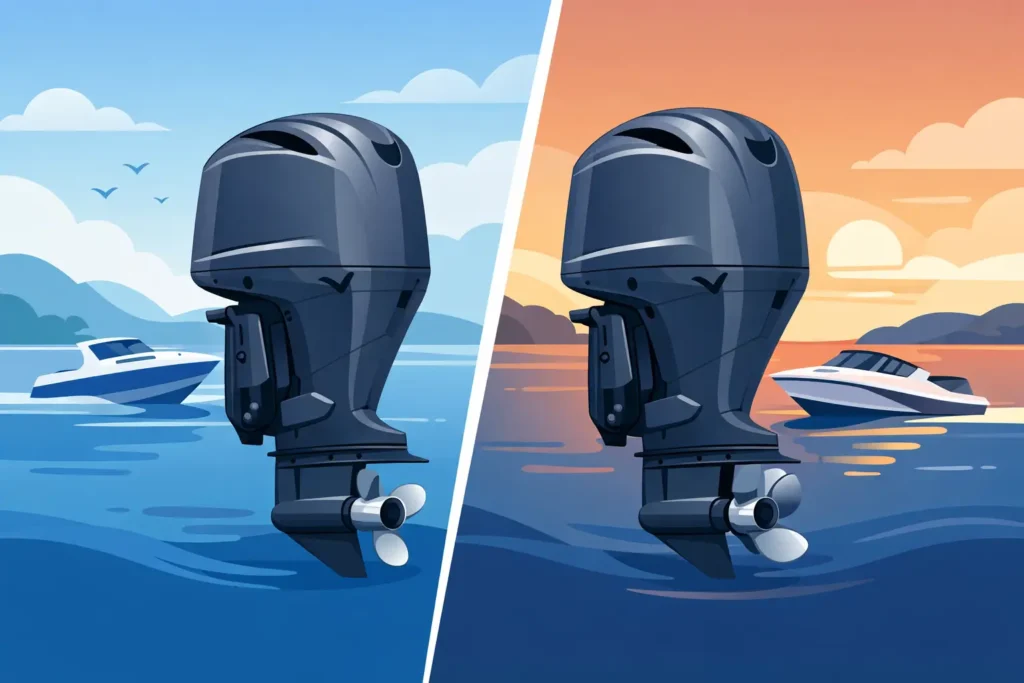
If you’re stuck on the yamaha 150 vs 200 outboard decision, the real question is not which one is better on paper. It is which one makes more sense for your hull, your load, and your budget. A lot of buyers pay extra for 200 HP because it sounds safer, faster, and more future-proof. Sometimes that is the right move. Sometimes it is money you will never really use.
For owners repowering a center console, bay boat, aluminum fishing boat, or small commercial rig, this comparison usually comes down to four things – hole shot, top-end speed, fuel burn at your normal cruise, and total purchase cost. The gap between a Yamaha 150 and a Yamaha 200 can feel big at checkout, so it is worth getting specific before you buy.
Yamaha 150 vs 200 outboard: the main difference
The simplest difference is horsepower. A 200 gives you more thrust, stronger acceleration under load, and more top-end potential. A 150 costs less, usually sips less fuel in comparable use, and often lands in the sweet spot for boat owners who do not run heavy every day.
That sounds obvious, but the important part is how that extra 50 HP shows up on the water. On a lightly loaded 19- to 22-foot boat, a 150 can already feel strong and efficient. On a heavier 22- to 25-foot hull, or on a boat that regularly carries four to six adults, full fuel, gear, ice, and maybe a livewell, the 200 often feels less stressed and more responsive.
If your current boat is underpowered now, moving to a 200 may fix more than just speed. It can improve planing time, maintain cruise easier in rough water, and keep RPM in a more comfortable range when the boat is loaded down.
Performance on the water
Acceleration and hole shot
This is where many buyers notice the difference first. A Yamaha 200 will usually get on plane faster, especially with a heavier hull or a crew on board. If you run offshore, pull skiers, work a utility boat, or need quick response in changing conditions, that added power matters.
A Yamaha 150 is not slow. On the right setup, it can still deliver strong midrange performance and clean planing. But if your boat already feels like it needs too much trim, too much throttle, or too much patience to get moving, a 150 may only be good enough instead of ideal.
Top speed
Top speed matters to some buyers and not much to others. In real ownership, most people cruise far more than they run wide open. Still, the 200 should produce a noticeable speed increase on the same hull if prop, setup, and conditions are comparable.
The exact gain depends on boat type. On some rigs, the difference might be modest. On others, especially heavier boats, the 200 can open up a more useful speed range. That does not just mean bragging rights. It can mean holding a comfortable cruise without running as close to full throttle.
Cruise efficiency
This is where the comparison gets more nuanced. A 150 often looks like the more economical choice, and at lower overall operating cost, it often is. But if the boat is too much for the engine, the 150 may need to work harder than a 200 to maintain the same real-world cruise.
That is why fuel economy is not just about engine size. It is about the engine matched to the hull. A 200 on a heavy boat can sometimes be the more comfortable and practical setup, even if the larger motor burns more at the top end.
Boat size and hull match
Choosing between 150 and 200 HP gets easier once you stop thinking only about engines and start thinking about the boat.
For many 18- to 21-foot boats, a Yamaha 150 is a very sensible repower or new setup. It keeps upfront cost lower and still gives enough performance for fishing, family cruising, and general use. If the manufacturer rates the boat comfortably around that range and you do not carry heavy loads all the time, 150 HP can be the smart buy.
For many 21- to 25-foot boats, especially deeper V hulls, larger center consoles, and work-oriented setups, a Yamaha 200 often makes more sense. It gives more authority when the weather changes, when the boat is full, or when you need stronger midrange push.
The key point is this: buying less motor to save money only works if the boat still performs the way you need it to. If you are always carrying extra fuel, coolers, tackle, passengers, or equipment, that lower purchase price can turn into daily frustration.
Weight, rigging, and transom considerations
One reason buyers lean toward a 150 is weight. Depending on the exact Yamaha model and shaft configuration, a 150 may be lighter than a 200, which can matter on smaller hulls. Less transom weight can help balance, draft, and overall setup.
But do not assume the difference is always dramatic. Some modern outboards across these horsepower ranges are closer in weight than buyers expect, particularly within the same engine family. That is why the model-to-model comparison matters more than the horsepower sticker alone.
Rigging costs should also be part of the decision. If you are repowering, controls, gauges, props, steering, and mounting details may affect total installed cost. A buyer focused only on the engine price can get surprised fast. When comparing a Yamaha 150 vs 200 outboard, the right question is total package cost, not just advertised motor cost.
Purchase price and long-term value
A 150 usually wins on upfront affordability. That matters, especially for budget-conscious buyers replacing a failed motor or trying to get back on the water without overspending. If your boat runs well with 150 HP, there is no reason to pay for power you will not use.
A 200, though, can hold value well because it appeals to buyers who want stronger performance and more flexibility. On certain boats, it can also help resale because the package feels more complete. A boat that is correctly powered tends to be easier to move than one buyers see as underpowered.
This is where honest use matters. If you keep boats a long time, fish hard, run loaded, or use the boat for business, the extra money for a 200 may pay off in daily satisfaction. If you mostly do local runs, light family trips, and weekend fishing on a moderate-size hull, a 150 may give you the better return.
Which buyer should choose the Yamaha 150?
The Yamaha 150 is usually the better fit if you want to keep cost lower, your boat falls comfortably within that horsepower range, and you care more about practical cruising than maximum output. It also makes sense for buyers repowering older boats where balance and simplicity matter.
It is a strong option for bay boats, smaller center consoles, aluminum fishing rigs, and general recreation setups that do not carry heavy loads every trip. If your priority is solid performance at a better price, this is often where the smart money goes.
Which buyer should choose the Yamaha 200?
The Yamaha 200 is the better choice if your boat is on the heavier side, you run loaded often, or you do not want the engine working near its limits during normal use. It fits buyers who want better acceleration, more speed overhead, and stronger all-around authority on the water.
This choice also makes sense for offshore-minded owners, small commercial operators, and buyers who know they will regret not stepping up. Paying more once is usually cheaper than repowering twice.
The mistake buyers make most often
The most common mistake is buying only by price or only by horsepower. Cheapest is not always best value, and biggest is not always best fit. The right motor is the one that matches your hull rating, your normal load, and the way you actually use the boat.
That is why inventory matters. If you are comparing new, used, or budget-priced options, it helps to look at what is available right now and compare complete package value. A well-priced Yamaha 200 can be the better deal than a 150 if the numbers are close. The opposite is also true.
At Yamaha Motor Shop, many buyers come in looking at horsepower first and then narrow the choice once they compare real inventory, pricing, and application fit. That is usually the fastest way to make a smart purchase.
Final call on yamaha 150 vs 200 outboard
If your boat is moderate in size, your loads are reasonable, and your goal is dependable performance at a lower buy-in, the 150 is hard to beat. If your hull is bigger, your runs are longer, or your boat stays loaded most of the time, the 200 is often money well spent.
The best choice is the one you will still feel good about after a full season of fuel bills, weather changes, and real-world use. Buy for how you run the boat, not just for what looks good in the listing.