If you’re asking what Yamaha outboard fits my boat, you’re probably not looking for a generic horsepower chart. You want the right engine for your hull, your load, and your budget – without paying for more motor than you need or ending up underpowered on the water. That decision comes down to a few real-world factors: boat size, transom rating, shaft length, typical use, and whether you want new or used.
What Yamaha outboard fits my boat depends on the rating plate
Start with the capacity plate on the boat. That plate tells you the maximum horsepower the manufacturer allows, and that number matters. If your boat is rated for 150 HP, then a Yamaha 150 is usually the ceiling. Going over that rating can create insurance problems, safety issues, and handling problems that cost more than any deal you got on the engine.
Staying under the max is where the real choice happens. Some owners want the highest rated horsepower for faster planing, better top end, and stronger performance with passengers or gear. Others want to save money and fuel by stepping down one class. A bay boat rated for 200 HP may run well with a Yamaha 150 if the load is light and speed is not the priority. The trade-off is simple – less upfront cost, but also less punch coming out of the hole and less margin when conditions get rough.
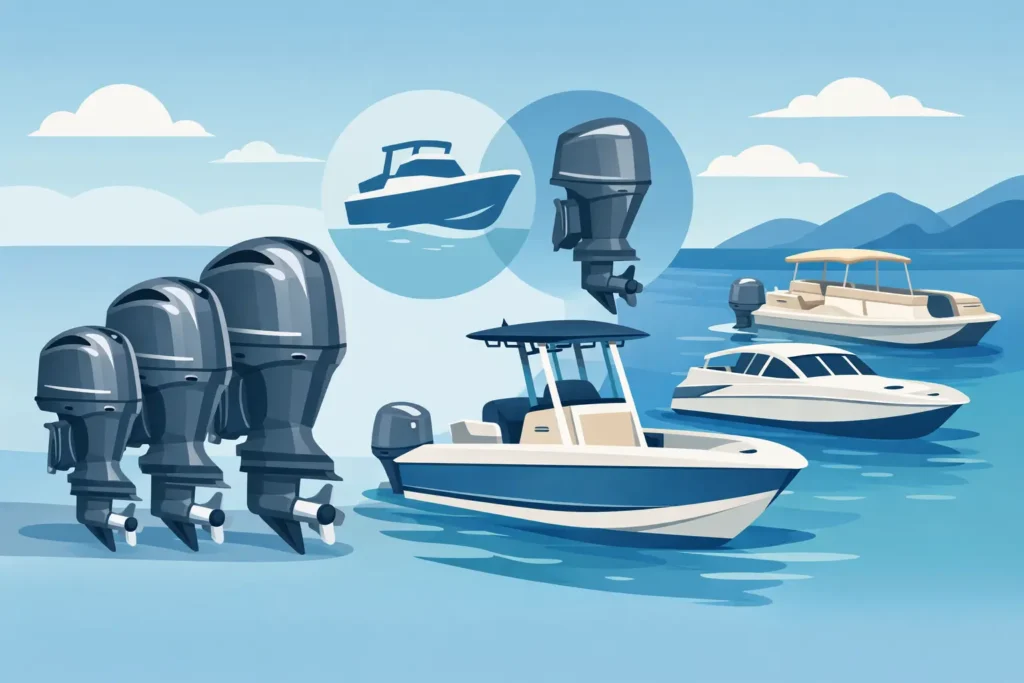
Match the boat type before you match the motor
A 150 HP outboard does not behave the same way on every hull. Hull weight, beam, deadrise, and intended use all change what fits best. That’s why the answer to what Yamaha outboard fits my boat is never just about length.
Jon boats and small aluminum fishing boats
Smaller aluminum boats usually reward lighter motors. In many cases, a modest Yamaha outboard is the better fit because too much weight on the stern can hurt balance and draft. If the boat is used for lakes, calm rivers, or short runs, the best choice is often the smallest Yamaha that still gets the boat on plane with your usual load.
Bass boats and bay boats
These boats are often performance-sensitive. If you’re carrying gear, multiple batteries, electronics, a full livewell, and one or two anglers, underpowering the boat can get frustrating fast. In this category, many buyers shop close to the boat’s max rating because speed and response matter.
Center consoles and family fishing boats
For center consoles, the right fit depends heavily on use. Nearshore fishing with two people is one thing. Offshore runs with ice, fuel, safety gear, and several passengers is another. A Yamaha 150, 175, 200, or 225 may all fit the same basic size range depending on hull design and load.
Pontoon boats and utility use
Pontoons are different because they are often loaded with people first and speed second. A lower horsepower option may be fine for cruising, but watersports or heavy passenger loads usually call for more motor. If the pontoon stays full most weekends, it pays to size for that reality instead of the one time you take it out light.
Horsepower is only part of the answer
Most buyers focus on horsepower first, and that makes sense. But there are three other fit issues that matter just as much.
Boat weight and real load
Factory dry weight is not how most boats run. Add fuel, batteries, coolers, tackle, gear, and passengers, and the engine has a different job. If your boat always runs heavy, choosing the bottom end of the acceptable horsepower range may save money now but feel like a compromise every trip.
Shaft length
A Yamaha outboard can be the right horsepower and still be the wrong fit if the shaft length does not match the transom. Too short and you can get ventilation and poor prop bite. Too long and the setup can drag, affect trim, and create handling issues. Measure transom height and match it correctly before making a buying decision.
Engine weight
Modern 4-stroke outboards are popular for fuel economy, reliability, and quieter operation, but weight still matters. Some older boats were designed around lighter engines. If you’re replacing an older two-stroke with a newer 4-stroke, compare the actual engine weight and make sure the hull can handle it.
What Yamaha outboard fits my boat for common horsepower ranges
This is where many shoppers narrow the field quickly.
A Yamaha 115 HP is often a strong fit for smaller bay boats, aluminum fishing boats, and lighter center consoles that need dependable everyday performance without jumping into a higher budget tier. It is a practical option for buyers who want solid fuel economy and enough power for fishing and family use.
A Yamaha 150 HP is one of the most common upgrade points because it sits in a sweet spot between cost and capability. For many mid-size boats, it gives enough power to plane confidently with passengers and gear, while keeping cost lower than moving into the 175 or 200 range.
A Yamaha 175 HP or 200 HP makes sense when the hull is heavier, the load is more demanding, or the owner simply wants stronger all-around performance. These motors are common on center consoles, larger bay boats, and boats that need more offshore-ready confidence.
A Yamaha 225 HP or 250 HP usually enters the conversation for larger center consoles, heavier hulls, and operators who need top-end power without compromise. Commercial users and serious recreational owners often shop here because lost performance under load is more expensive in the long run than buying enough motor upfront.
New vs used changes what fits your budget
Sometimes the best answer is not just which Yamaha outboard fits your boat, but which one fits your budget without forcing a bad compromise. That is where new versus used matters.
A new Yamaha outboard is the right move for buyers who want factory warranty coverage, current model reliability, and the confidence of starting fresh. This is especially appealing when the boat is a long-term keeper or used for commercial work where downtime costs money.
A used Yamaha outboard can be the smarter value if you’re replacing a failed motor, repowering an older hull, or trying to stay within a strict number. If the engine has been checked properly and the condition is solid, used inventory can open up horsepower classes that may have been out of reach in new models.
The trade-off is straightforward. New usually means more money upfront and more peace of mind. Used can mean lower cost and faster access to higher horsepower, but condition matters more than price alone.
Think about how the boat actually gets used
A lot of bad engine choices happen because buyers shop for the boat’s best day, not its normal day. If your boat spends most of its time with one or two people in calm water, that points to one setup. If it regularly carries a crew, fuel, ice, gear, and sees rougher conditions, that points to another.
If fuel economy matters most, a slightly smaller Yamaha can make sense. If hole shot, load carrying, and resale matter more, a higher horsepower option may be the better value. There is no perfect answer for every boat owner. There is only the best fit for the way you run your boat.
The fastest way to choose the right Yamaha outboard
If you want to make a decision quickly, gather five details before you shop: boat make and model, year, max horsepower rating, transom height, and typical load. Once those are clear, it becomes much easier to compare a Yamaha 115, 150, 175, 200, 225, or 250 without guessing.
That is also the point where price shopping becomes more useful. Looking at discounted inventory before you know the right horsepower can waste time. But once you know your correct range, you can shop what is in stock, compare new and used options, and move on a deal while inventory is available. Yamaha Motor Shop serves buyers who want that kind of direct process – practical options, competitive pricing, and faster buying decisions.
The right outboard should make the boat feel balanced, capable, and worth the money every time you turn the key. If you’re close between two horsepower classes, be honest about your real load and your real budget, because the best fit is the one you will still be happy with after the first season.