
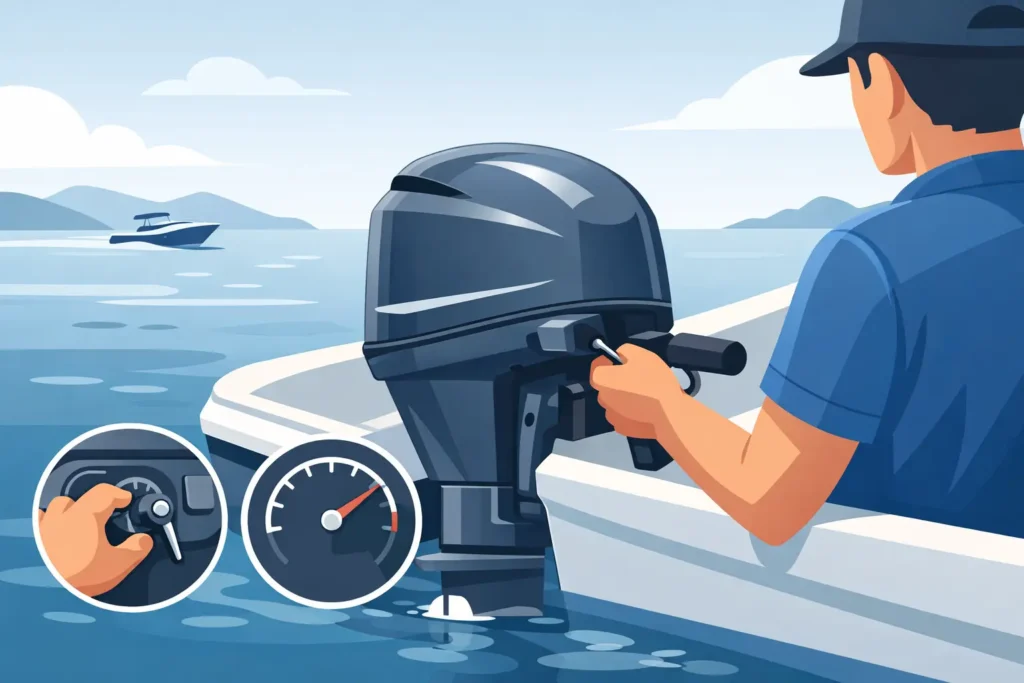
If your engine will not fire when you are trying to leave the dock, you do not need a lecture – you need a clear process. Knowing how to start Yamaha outboard motor models the right way saves time, protects the engine, and helps you spot a small issue before it turns into a bigger repair.
A Yamaha outboard usually starts easily when fuel, battery power, safety switches, and procedure are all right. When one of those is off, even a good motor can act stubborn. That is why the best approach is not guessing. It is running a quick check, using the correct starting sequence, and paying attention to what the engine is telling you.
How to start Yamaha outboard motor step by step
Before you turn the key or hit the start button, make sure the motor is in a safe setup for starting. The control should be in neutral, the emergency stop lanyard should be clipped in place, and the battery switch should be on if your boat uses one. If the engine is tilted up, lower it to the proper running position. Also confirm there is fuel in the tank and the fuel shutoff, if equipped, is open.
If your Yamaha has a portable fuel tank, squeeze the primer bulb until it gets firm. That tells you fuel has moved forward in the line. If the bulb never firms up, check for a loose connection, a blocked vent, or a fuel line issue. A lot of no-start complaints begin right there.
Now insert the key and turn it to the on position. Watch for normal gauge sweep or indicator lights if your setup has them. On many Yamaha outboards, you then turn the key to start and release it as soon as the engine fires. Do not hold the starter too long. Short starting attempts are better than grinding the starter continuously.
If the engine starts, let it settle into idle. Look for a steady cooling water stream from the telltale. If there is no water stream after startup, shut the motor down and inspect it before running further. A running engine with no cooling water flow is not something to ignore.
Cold start vs warm start
Cold starts and warm starts are not always the same. A cold Yamaha outboard may need slightly more time to catch and stabilize, especially after sitting overnight or after long storage. Newer fuel-injected 4-stroke models usually manage this well on their own, but older carbureted engines can be more sensitive to setup and fuel delivery.
For a cold start, prime the fuel system fully and avoid touching the throttle unless your model specifically requires a warm-up or fast-idle function. Some Yamaha controls have a neutral warm-up feature. If yours does, use it as directed for cold starting, but do not over-rev a cold engine at the dock.
For a warm start, less is usually more. If the engine has been running recently, it often starts quickly with no extra input. Overworking the key, throttle, or primer can actually make a warm engine harder to start.
The checks that matter before startup
A clean startup begins before the key turns. Fuel is the first item. Old gas, water in the fuel, or an air leak in the line can make the engine crank without starting. If the motor has been sitting for a while, stale fuel is a real possibility. Ethanol-related fuel problems are still common, especially on boats that do not run every week.
Battery condition matters just as much. If the starter sounds weak or the gauges drop out when you crank, low battery voltage may be the issue. Many owners focus on fuel first, but a marginal battery can create all kinds of misleading symptoms.
Then check the basics people skip because they are in a hurry – the safety lanyard, neutral position, fuel tank vent, and fuel primer bulb. These are small details, but they stop more starts than major engine failures do.
Common reasons a Yamaha outboard will not start
If you are trying to figure out how to start Yamaha outboard motor setups that are giving you trouble, narrow the problem down by symptom. An engine that does nothing when you turn the key is different from one that cranks strongly but will not fire.
If nothing happens at all, check the battery, battery terminals, main fuse, safety lanyard, and neutral switch. Corroded battery connections are a frequent cause, especially in saltwater use. Even slight corrosion can reduce starting power.
If the engine cranks but does not start, think fuel or spark first. Is the primer bulb firm? Is the tank vent open? Is there fresh fuel in the tank? Has the motor been sitting long enough for injectors or carburetors to gum up? If you smell fuel strongly after repeated attempts, you may also be dealing with flooding on some setups.
If it starts and then dies, look at fuel delivery, idle quality, and water contamination. Engines that run briefly and quit often have enough fuel to light off but not enough clean, consistent flow to stay running.
How to avoid hard starts after storage
A lot of buyers shop for replacement motors because the old one became unreliable, but many hard-start complaints come from storage habits, not fatal engine problems. If your Yamaha sits for weeks or months, fuel treatment and battery maintenance are worth the small cost.
Keep fuel fresh, use the right stabilizer when storing the boat, and charge the battery regularly. On portable tank setups, inspect the hose and primer bulb for age cracks or stiffness. On larger rigs, pay attention to water-separating filters and fuel quality. A clean, well-fed outboard is much more likely to start on the first try.
It also helps to run the engine often enough to keep fuel moving through the system. An outboard that is used consistently usually gives fewer startup problems than one that sits all season and then gets expected to perform on demand.
Model differences matter
Not every Yamaha starts exactly the same way. A small tiller outboard with a manual start setup is different from a 150 HP or 225 HP electric-start 4-stroke with modern controls. Fuel-injected engines are generally more forgiving on startup, while older carbureted motors can demand better fuel system upkeep and a more exact routine.
That is why owner familiarity matters. If you recently bought a used engine, spend a few minutes confirming the exact control layout, choke or warm-up features, battery arrangement, and fuel system routing. Buyers moving up in horsepower often assume every outboard behaves the same. They do not.
With used motors, startup condition is one of the fastest ways to judge overall care. A Yamaha that starts cleanly, idles steadily, and shows strong cooling water flow usually tells a better story than one that needs repeated cranking and throttle tricks just to stay alive.
When not to keep cranking
There is a point where trying again and again stops being practical. If the starter is dragging, the battery is fading, or you have already made several clean attempts without ignition, stop and reassess. Repeated cranking can drain the battery fast and make diagnosis harder.
Check for spark, confirm fuel delivery, and inspect visible connections. If the motor recently ran well and suddenly will not start, focus on the most likely simple causes first. If it is a newly purchased used outboard and startup behavior seems questionable from day one, that is a different situation. In that case, service history and pre-sale inspection quality matter a lot.
For buyers comparing replacement options, dependable starting is not just a convenience feature. It is a value issue. A competitively priced outboard that starts right, idles right, and runs right is usually the better buy than a cheaper engine with unknown fuel and electrical issues.
How to start Yamaha outboard motor models with fewer problems over time
Good startup habits reduce wear and cut down on no-start mornings. Use fresh fuel, keep the battery charged, inspect fuel lines regularly, and do not ignore weak cranking or inconsistent idle. Those are early warnings, not minor annoyances.
Routine service also matters. Spark plugs, filters, engine oil on 4-strokes, and water-separating fuel filters all affect how willingly an outboard starts. If your motor is older or heavily used, staying ahead of maintenance is cheaper than chasing failure after failure.
For anyone shopping now, it pays to think beyond horsepower and price alone. Startup reliability, maintenance history, and fuel system condition should be part of the deal. That is especially true if you are comparing new inventory with used options or looking at higher horsepower motors for work use. Yamaha Motor Shop serves buyers who want available motors at competitive prices, but the smart buy is still the one that fits your boat and starts when you need it.
The best test of any outboard is simple – when it is time to leave, the engine should start without drama.