
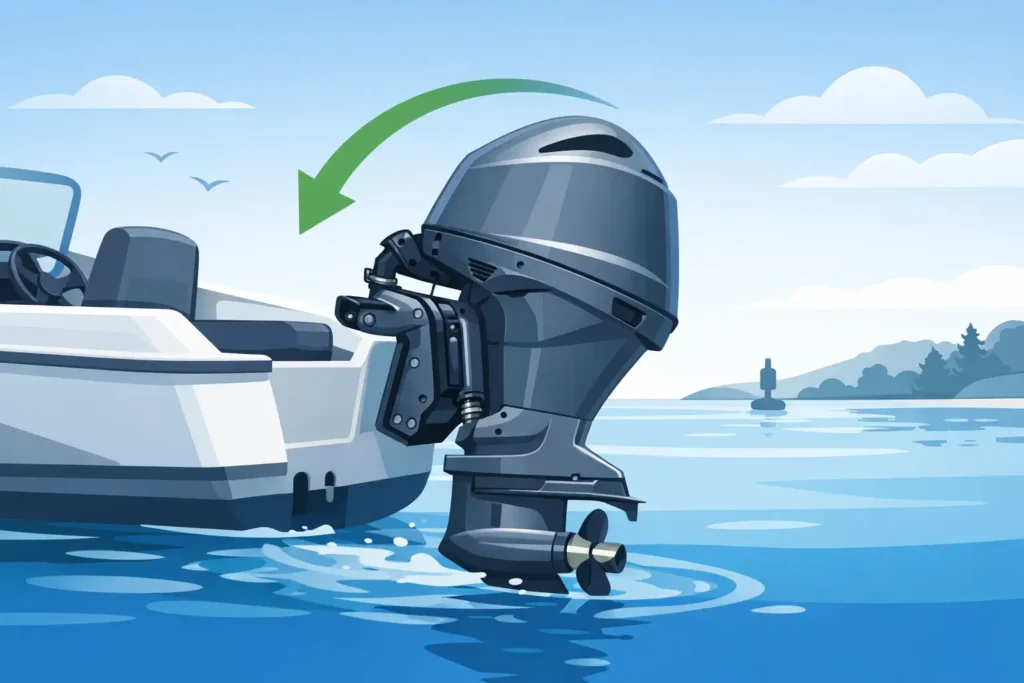
That moment when the skeg is getting too close to the ramp, the trailer bunks, or a shallow shoreline is not the time to guess. If you need to know how to tilt Yamaha outboard motor the right way, the goal is simple – raise it without damaging the trim system, prop, transom, or engine bracket.
Most Yamaha outboards use a power trim and tilt system, but the exact feel can vary by horsepower and model year. A 115 HP, 150 HP, 200 HP, or 250 HP Yamaha will follow the same basic process, yet older units, used motors, and engines with weak batteries can behave differently. That is why it helps to know both the normal tilting method and the backup option if power tilt is not working.
How to tilt Yamaha outboard motor with power trim
On most Yamaha outboards, tilting starts with the trim switch. You will usually find one switch on the remote control handle and another on the engine pan near the cowling. Press and hold the up side of the switch to raise the outboard.
At first, the motor trims up in smaller increments. This changes the running angle of the engine while the boat is in the water. Keep holding the switch and the system will move past trim range into full tilt range, where the motor rises higher for shallow water, beaching, trailering, or storage.
Do not stab the switch in short bursts unless you are making a fine adjustment. A steady press gives you smoother movement and helps you feel if the system is straining. If the engine hesitates, moves unevenly, or sounds weak, stop and check battery voltage and hydraulic performance before forcing it.
The basic tilting sequence
Before you raise the engine, shift to neutral and make sure no one is near the propeller or bracket area. If the boat is on the trailer, make sure the trailer is stable and the engine has room to rise without hitting the ground or support frame.
Use the trim switch to raise the motor slowly. Watch the lower unit as it comes up. You want enough height to clear the bottom or protect the prop, but not so much speed or force that the motor slams against its upper stop.
If you are tilting for storage at the dock, keep in mind that full tilt is not always the best long-term position in freezing conditions or heavy weather. In some cases, a down position is better for drainage. It depends on where the boat is stored and the weather exposure.
When to tilt and when to trim
A lot of owners use the words trim and tilt like they mean the same thing, but they are not exactly the same. Trim is the smaller range used while operating the boat. Tilt is the larger upward range used when the engine is not being run at speed.
If you are underway, use trim to adjust ride and efficiency. If you are approaching a ramp, sandbar, or trailer, use tilt once you are slowed down and no longer running normally. Running too fast with the engine tilted too high can reduce cooling water pickup and put stress on the transom and mounting hardware.
That trade-off matters. A little extra engine angle can help in very shallow areas at idle, but too much tilt while under power can lead to overheating or poor handling. Raise it only as much as conditions require.
How to tilt a Yamaha outboard motor manually
If the battery is dead or the power trim and tilt system will not operate, most Yamaha outboards have a manual release valve on the trim and tilt assembly. This is commonly a screw or valve located on the side of the hydraulic unit.
Turn the manual release valve slightly – usually counterclockwise – to relieve hydraulic pressure. Once pressure is released, you can lift the outboard by hand. Larger four-stroke motors are heavy, so use care. On bigger Yamaha engines, this may take two people or mechanical assistance.
After you raise or lower the motor to the position you want, tighten the manual release valve again. If you leave it loose, the engine may not hold position properly once power is restored.
Important caution with manual tilting
Do not completely remove the valve unless the service manual specifically calls for it. A small turn is usually enough. Also, do not put fingers near pinch points around the bracket or tilt tube while moving the engine. Hydraulic systems can shift suddenly.
If the engine drops on its own after manual positioning, the issue may be more than just low battery power. It could point to a hydraulic leak, worn seals, or a faulty trim unit that needs repair.
Using the tilt support lever or trailering support
Once the motor is fully tilted, many Yamaha outboards have a tilt support lever or mechanical stop. This is designed to help hold the engine in a raised position during service or limited support situations. Some owners also use a transom saver or external support for trailering.
This is where it depends on your setup. For short moves around a yard, the built-in support may be enough. For road trailering over distance, many boaters prefer an added support device to reduce bouncing and stress. The key is to keep the engine secure without putting odd pressure on the hydraulic rams.
Do not assume full hydraulic pressure alone is the best long-distance trailering solution. Road shock can be hard on trim systems, especially on heavier outboards.
Common problems when your Yamaha outboard will not tilt
If you press the switch and nothing happens, start with the basics. Check battery charge, battery connections, fuses, and the emergency stop condition. Weak power is one of the most common reasons a trim and tilt unit stops responding.
If you hear the motor running but the outboard does not move, the hydraulic system may be low on fluid or have internal failure. If there is no sound at all, the issue may be electrical – a bad relay, switch, wiring problem, or weak battery.
Sometimes the engine will tilt up but not down, or down but not up. That usually narrows the problem to a relay, switch circuit, or hydraulic fault rather than a complete system failure. Used outboards can show this kind of issue more often, especially if they sat for long periods.
Signs you should stop and inspect
If the engine jerks, leaks fluid, squeals, or drifts down after being raised, do not keep cycling the system over and over. That can turn a smaller repair into a more expensive one. Look at the trim rams, wiring, and fluid condition first.
Corrosion around electrical terminals is another common problem in saltwater use. Even a good Yamaha outboard can have trim trouble if the connections are dirty or the battery is not delivering full voltage.
Best times to raise the motor fully
Full tilt is useful when loading on a trailer, idling in skinny water, clearing debris from the prop area after shutting down, or storing the boat. It also helps protect the lower unit when the boat is tied up in shallow slips.
Still, higher is not always better. If the motor is raised too far while people are boarding or moving around the stern, weight distribution can shift and make access awkward. On some boats, a fully tilted engine can also interfere with covers, rigging hoses, or tight garage clearance.
That is why experienced owners adjust based on the situation, not just by habit. Enough clearance is the goal, not maximum angle every time.
A practical check before you buy or install another outboard
If you are shopping for a replacement Yamaha outboard, check trim and tilt operation before you commit. A clean powerhead and good compression matter, but a weak trim system can still cost you time and money after purchase.
Run the engine through full trim and tilt range. Listen for strain, watch for leaks, and confirm it holds position. On higher horsepower models, especially used units, this check is worth doing every time. Buyers looking for value usually focus on price first, but function is what keeps the deal good.
For owners upgrading horsepower or replacing an older engine, make sure the tilt range matches your transom setup and trailer clearance. A bigger outboard can change how easily the motor clears the ground when raised. That matters on ramps, driveways, and storage.
If you need a Yamaha replacement and want straightforward pricing on new or used horsepower options, Yamaha Motor Shop is one of the places buyers look when they want inventory access without wasting time.
Tilting your outboard should feel controlled, not risky. If the system is healthy and you use the right method for the situation, raising a Yamaha outboard is quick work and helps protect the motor where it matters most.