
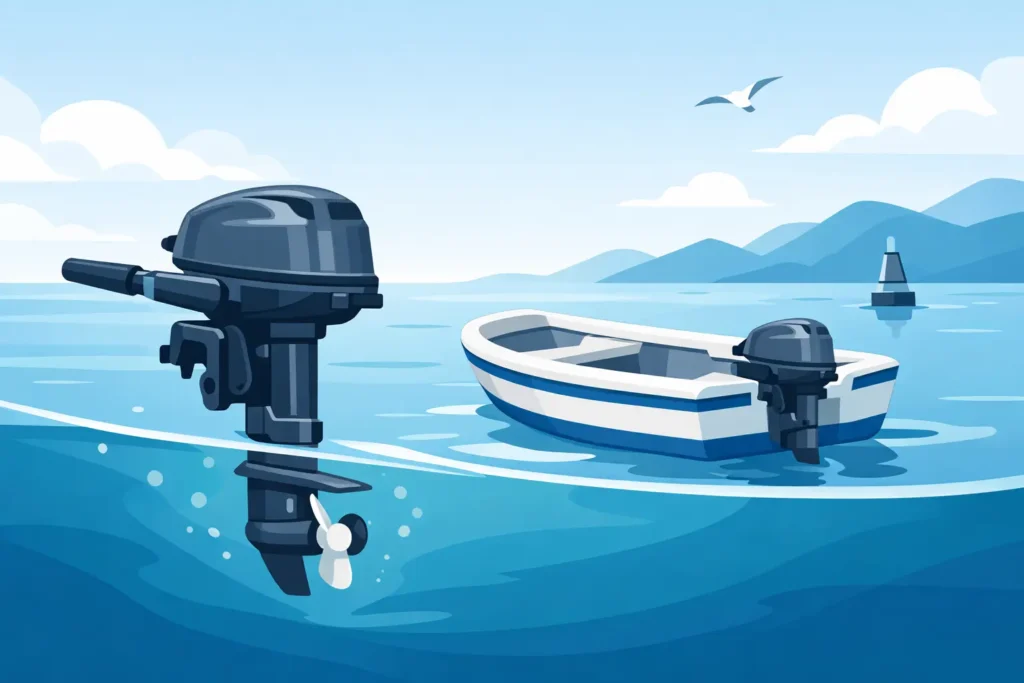
If you are asking what is the smallest Yamaha outboard motor, the short answer is the Yamaha 2.5 HP portable outboard. It sits at the bottom of Yamaha’s horsepower range and is built for buyers who need a light, simple, easy-to-carry motor for very small boats, tenders, jon boats, and short, low-speed runs.
That answer is simple. The buying decision usually is not.
Small outboards attract a specific kind of customer. Some want the lightest possible motor for a dinghy. Some need a backup kicker that does not take up much space. Others are replacing an old portable engine and want to stay with Yamaha because parts support, reliability, and resale value matter. When you are buying at the low end of the horsepower range, a few pounds of weight, a little extra fuel efficiency, and shaft length options can make a bigger difference than people expect.
What is the smallest Yamaha outboard motor and who is it for?
The smallest Yamaha outboard motor is the 2.5 horsepower model. It is a compact portable four-stroke outboard designed for small craft where low weight and basic operation matter more than speed or heavy-load performance.
This motor makes the most sense for inflatable boats, very small aluminum boats, canoes with a proper transom setup, and sailboat tenders. It is also a practical option for buyers who do not want the extra bulk of a 4 HP, 6 HP, or 9.9 HP engine. If your priority is getting on and off the boat ramp fast, lifting the engine by hand, and storing it without a hassle, this is where the 2.5 HP model earns its value.
For many buyers, the real appeal is portability. Once you move up in horsepower, even within Yamaha’s portable lineup, transport gets less convenient. A larger engine may give you better thrust and control in current or wind, but it also asks more from your back, your transom, and your storage space.
Why buyers look for the smallest Yamaha outboard motor
Most shoppers looking at the smallest Yamaha are not trying to maximize speed. They are trying to solve a practical problem at a good price.
A small tender owner may need an engine that can be lifted from dock to boat without help. A fishing buyer may have a tiny jon boat used on calm inland water where top-end power is not necessary. A sailboat owner may want a compact auxiliary motor for short trips from anchorage to shore. In those situations, buying too much horsepower can mean paying more, carrying more weight, and dealing with more engine than the boat really needs.
That said, small does not always mean cheap in the long run if it is the wrong fit. If your boat regularly carries two adults, gear, fuel, and a battery, a 2.5 HP can feel underpowered fast. If you operate in wind, chop, tidal current, or marsh areas where maneuverability matters, stepping up to a slightly larger Yamaha can be the smarter value even if the sticker price is higher.
What you can expect from a Yamaha 2.5 HP outboard
The Yamaha 2.5 HP is built around simplicity. Buyers usually choose it because they want dependable small-engine performance without unnecessary complexity. It is a four-stroke design, which matters for shoppers who prefer cleaner operation, straightforward fuel use, and broad acceptance across waters where emissions rules can affect engine choice.
In real use, this motor is best for low-speed transportation, short runs, and light-duty boating. It is not made to plane a loaded boat in demanding conditions. It is made to push a small hull efficiently and reliably. That distinction matters because some buyers see the Yamaha badge and assume even the smallest engine will cover every use case. It will not.
You should also expect a tiller-steer setup and a lightweight carry-friendly design. That is part of the appeal. A lot of buyers shopping this size care less about premium features and more about fast setup, clean storage, and a motor that starts when they need it.
Smallest does not always mean best value
This is where many buyers save themselves money by being honest about use.
If your boat is only a tender or a one-person utility rig, the 2.5 HP can be the right buy. If you want to move more weight, cover longer distances, or handle rougher water with more control, the next step up in horsepower may deliver better overall value. Spending less up front on the smallest motor can lead to frustration if the engine is working at its limit every time you launch.
The biggest trade-off is power versus portability. The 2.5 HP wins on easy handling and compact size. Larger portable Yamahas win on thrust, versatility, and ability to handle changing conditions. There is no universal best choice. It depends on boat size, passenger load, and where you run.
For experienced buyers, this is usually the key question: do you want the smallest engine Yamaha makes, or do you want the smallest engine that will actually do the job well? Those are not always the same answer.
How the smallest Yamaha compares to larger portable models
Once you compare the 2.5 HP to 4 HP, 6 HP, or 9.9 HP Yamaha outboards, the differences become practical very quickly.
The 2.5 HP is easier to carry and easier to store. It is better for very small transoms and buyers who move the motor frequently. It also fits buyers who want a simple auxiliary engine and do not need serious push.
A 4 HP or 6 HP model usually gives you more useful real-world flexibility. You get better low-end thrust, improved performance with passengers or gear, and a motor that feels less strained in less-than-perfect conditions. A 9.9 HP is often where buyers start looking when they need stronger all-around utility from a portable package, but that comes with more weight and a higher budget.
If price is driving the decision, buyers often focus on the smallest engine first. That makes sense. But if you will use the motor often, a slightly larger model may be the better deal because it expands the number of situations where the boat performs well.
What to check before you buy
Before buying the smallest Yamaha outboard motor, make sure the engine matches the boat and the job.
Start with your boat’s maximum horsepower rating and transom specification. Then think about actual load, not ideal load. A boat that feels fine with one person may behave very differently with a second passenger, cooler, fuel tank, and fishing gear onboard.
You should also check shaft length. This matters more than some buyers expect. A mismatch between the outboard shaft and transom height can hurt performance, increase spray, and make the boat harder to control. For small boats, these setup mistakes show up quickly.
Fuel system design, storage position, and carrying convenience also matter when shopping portable outboards. If the motor will be moved in and out of a vehicle often, even modest weight differences can affect day-to-day satisfaction. Buyers replacing an older engine usually notice this right away.
If budget is tight, it can also make sense to compare new versus used inventory. A used Yamaha portable outboard in clean condition can be a strong value buy, especially for seasonal or occasional use. The main thing is to confirm condition, service history when available, and whether the motor has been used in freshwater or saltwater.
Is the Yamaha 2.5 HP enough for your boat?
Sometimes yes, sometimes absolutely not.
It is enough for a lightweight dinghy, a tender, or a small utility setup used in calm water and short distances. It can be a smart buy for minimalist boaters who want a dependable small outboard without paying for more power than they will use.
It is probably not enough if you expect strong acceleration, planing performance, regular multi-person loads, or dependable control in wind and current. In those cases, the smallest Yamaha may be too small, even if it is attractive on price and portability.
This is why serious buyers compare use first and horsepower second. The right engine is not just the one that fits the budget. It is the one that fits the work.
Buying the smallest Yamaha with price in mind
For a lot of shoppers, this category is all about affordability. That is reasonable. Portable outboards are often secondary engines, replacements for older small motors, or practical purchases for utility boats where cost matters.
Still, low purchase price should be weighed against long-term use. If the engine is too small for your normal load, the savings disappear fast because the motor never feels adequate. If the fit is right, though, a Yamaha 2.5 HP can be one of the most economical ways to get reliable small-boat power from a proven brand.
At Yamaha Motor Shop, buyers looking across horsepower ranges often start with budget, then narrow by weight, intended use, and availability. That is usually the right order. Price gets attention, but matching the engine to the boat is what avoids a bad buy.
If you are shopping the smallest Yamaha outboard, keep the goal simple: buy the lightest motor that can still do your real job without strain. That is where a small outboard stops being cheap and starts being worth it.