
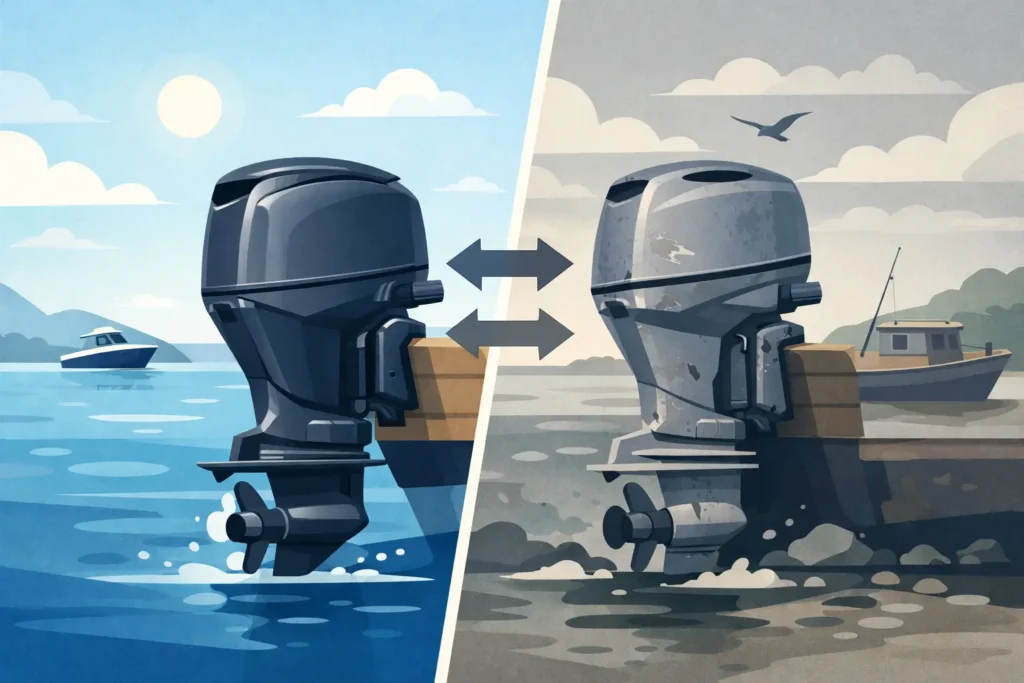
A low sticker price can save you money fast, or cost you twice if the outboard is wrong for your boat, your workload, or your season. If you want to know how to compare new and used outboards the right way, start with total value, not just the number on the tag. Buyers who already know their horsepower range usually make the best decision when they weigh price, warranty, condition, hours, and downtime risk together.
How to compare new and used outboards without wasting money
The biggest mistake is comparing a used 200 HP against a new 200 HP as if they are equal products with different prices. They are not. A new outboard gives you a fresh service life, stronger warranty protection, and fewer unknowns. A used outboard may give you a better upfront deal, a faster upgrade path, or access to a higher horsepower class that would otherwise be out of budget.
That is why the real question is not just, which one is cheaper? The better question is, which option gives you the best cost per season, with the least risk for the way you actually run your boat?
If you are repowering a center console used every weekend, your answer may be different from a small commercial operator who needs dependable daily hours. A lightly used engine with verified history can be a smart buy. An older motor with poor records and no clear maintenance story can turn a discount into repair bills fast.
Start with your use case before price
Before you compare listings, get clear on how the motor will be used. This is where many buyers save time. If your boat is used hard, carries heavy loads, runs offshore, or supports work use, the value of new gets stronger because reliability and warranty matter more. If your boat is used seasonally, close to shore, and your budget is tight, a clean used outboard may make more sense.
Hours matter, but they do not tell the whole story. A 150 HP motor with moderate hours and strong maintenance records can be a better buy than a lower-hour motor that sat neglected, corroded, or improperly stored. Use pattern matters too. Steady cruising hours are often easier on an engine than repeated short runs, heavy idling, or commercial stop-and-go use.
When buyers compare 115 HP, 150 HP, 200 HP, or 250 HP models, the best move is to stay focused on your required performance first. Do not drop horsepower just to afford new if that means the boat becomes underpowered. At the same time, do not jump into a higher used horsepower class if condition is questionable and support is weak.
Ask what matters most to you
For some buyers, the priority is lowest upfront cost. For others, it is predictable ownership cost for the next three to five years. Those are not the same thing. If you know which side you are on, comparing new and used gets much easier.
Compare the real purchase price, not just the advertised price
A new outboard usually costs more up front, but that price may include stronger warranty coverage and less immediate service work. A used outboard often looks cheaper, but your true purchase price may rise after inspection, rigging adjustments, fluid service, impeller replacement, prop changes, or repairs.
This is where disciplined buyers win. Instead of comparing list price to list price, compare ready-to-run cost. Ask what the engine needs now, what it will likely need within the next 100 hours, and what support comes with the sale.
A used motor that is priced low because it needs immediate work is not always a bad buy. It can still be the better deal if the total cost stays well below a comparable new engine and the powerhead, lower unit, and electronics check out. But if the savings disappear after catch-up service, the math changes quickly.
Condition beats age alone
A newer used outboard is not automatically the better motor. Condition matters more than model year by itself. A clean engine with proper flushing, scheduled service, and clear ownership history is usually worth more than a newer unit with missing records and signs of abuse.
Check the obvious first. Look for corrosion around brackets and fasteners, oil leaks, wiring issues, skeg damage, prop shaft concerns, and uneven paint wear that may point to heavier use than claimed. Then look deeper. Compression, diagnostic reports, lower unit condition, and service records carry more weight than cosmetics.
What to look at on a used outboard
You do not need a long checklist to spot major risk. Focus on these points: service history, engine hours, compression consistency, corrosion level, lower unit condition, and whether the motor starts, idles, shifts, and runs properly. If any of those are unclear, the discount should be strong enough to justify the risk, or you keep shopping.
For saltwater buyers, corrosion deserves extra attention. A used outboard from a salt environment can still be a solid buy, but only if it was cared for properly. Corrosion hidden under the cowl or around mounting areas can turn into expensive trouble later.
Warranty changes the value equation
One of the strongest reasons to buy new is warranty coverage. That protection is not just about repairs. It is about reducing uncertainty. If the motor is going on a boat that you depend on during peak season, warranty support can be worth more than the price gap.
Used outboards usually come with less protection, and sometimes none at all. That does not make them a bad deal. It just means the buyer takes on more risk. If you are comfortable with that risk and the motor is priced accordingly, used can still be the smart choice.
For many buyers, the sweet spot is simple. Buy new when uptime matters most, when financing the higher price is manageable, or when long-term ownership is the plan. Buy used when the condition is proven, the hours are reasonable, and the savings are real enough to justify shorter protection.
Brand, parts, and support still matter
When comparing new and used, do not ignore practical ownership. Parts availability, service familiarity, and resale demand all affect value. Popular outboard brands in common horsepower classes usually hold attention better in the market and are easier to support over time.
That matters whether you are shopping for a Yamaha 150 HP for a bay boat, a 200 HP repower, or even comparing alternatives like Suzuki in similar ranges. The engine is only part of the transaction. The ability to get answers, confirm inventory, and buy with confidence also matters, especially if your current motor has already failed and you need to move fast.
This is one reason budget-focused buyers often shop sellers with both new and used inventory. You can compare options side by side, ask direct questions, and decide whether lower price or longer protection fits your situation better. At Yamaha Motor Shop, that side-by-side buying approach is a practical advantage for buyers who want options without wasting time.
How to compare new and used outboards by long-term value
The best comparison is rarely about this month alone. Think about your next few seasons. A new outboard may cost more now but offer lower repair risk, better resale confidence, and fewer interruptions. A used outboard may cut your initial spend enough to free up budget for rigging, electronics, or other upgrades your boat needs now.
There is also a middle ground. Sometimes a lightly used 4-stroke with documented care gives you the best balance of price and reliability. That is especially true when buyers are trying to stay in a target horsepower range without stretching into the cost of brand-new inventory.
If you are the kind of buyer who replaces equipment on a schedule, used can make financial sense. If you keep motors for years and rack up hours, new often earns back the extra money through lower surprises and better support.
Make the final call with a simple standard
When you are down to two choices, ask yourself three direct questions. Which motor gives me the right horsepower without compromise? Which one has the lowest risk based on condition, records, and support? Which one gives me the better total cost over the time I expect to own it?
That standard keeps you from chasing a cheap number that does not hold up in real use. It also keeps you from overpaying for new if a strong used outboard already fits the job.
A good outboard buy is not about winning the lowest price on paper. It is about getting the most dependable power your budget can support, with the fewest surprises after the sale. Buy the motor that fits your boat, your workload, and your tolerance for risk, and the deal will make sense long after the invoice is paid.