
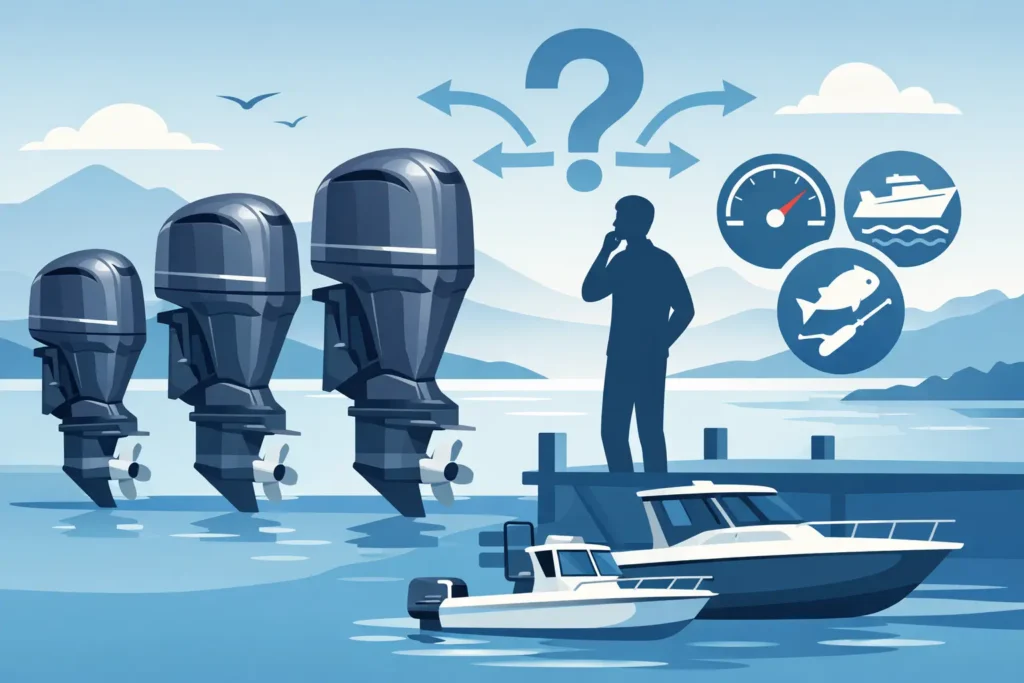
A 150 HP that feels perfect on one boat can feel underpowered on another. That is why how to choose Yamaha outboard horsepower starts with the boat, not the engine catalog.
If you buy too small, you may save money up front but lose performance, fuel efficiency, and carrying ability. If you buy too big, you can run into transom limits, extra weight, and a higher price than you need to pay. The right choice is the horsepower that matches your boat rating, your load, and the way you actually use the boat week after week.
How to choose Yamaha outboard horsepower without guessing
The first number to check is your boat’s maximum horsepower rating. That rating is there for a reason. It tells you the upper limit the boat was designed to handle safely, based on hull design, transom strength, and overall balance. If your boat is rated for 150 HP max, shopping for 200 HP is not a shortcut to better performance. It is the wrong motor for that hull.
Once you know the max rating, look at the boat’s size and hull style. A lightweight bay boat, an aluminum fishing boat, and a heavier offshore center console can all be similar in length but need very different power. Length matters, but weight matters just as much. So does beam, fuel capacity, and how much gear usually stays onboard.
Then be honest about your normal load. One angler with light gear is not the same as four adults, full fuel, a loaded livewell, batteries, a trolling motor, and a cooler. Many buyers choose horsepower based on the lightest possible setup and then wonder why the boat struggles in real use.
Start with the boat rating and real-world load
The cleanest way to narrow your options is to work backward from your real boating conditions. If your boat is rated for up to 250 HP, that does not automatically mean you need 250. But if you regularly carry a heavy load, run in current, fish offshore, or need quick planing, staying near the top end of the rating often makes sense.
On the other hand, if you use the boat on smaller lakes, carry moderate weight, and cruise more than you sprint, a lower horsepower option may be the better value. That matters for buyers who want the best price without paying for power they will rarely use.
A common mistake is treating horsepower like a simple ladder where more is always better. In real ownership, there is always a trade-off. More horsepower usually means a higher motor price, more weight on the transom, and potentially higher fuel burn when run aggressively. Less horsepower lowers cost, but can leave the boat slow to plane and working too hard under load.
Matching Yamaha outboard horsepower to boat use
How you use the boat should shape the horsepower decision as much as the spec sheet.
If you fish inshore, make short runs, and prioritize economy, a moderate horsepower setup may be the smart buy. If you run long distances, carry multiple passengers, tow watersports, or run offshore with fuel and gear, extra power is not just about speed. It helps with holeshot, cruising comfort, and keeping the engine from being stressed all the time.
For many buyers, the real decision falls between two nearby ranges, not five. It is often 150 HP versus 200 HP, or 200 HP versus 250 HP. In those cases, ask what problem you are trying to solve. Do you need better top-end speed, faster planing with a full load, better resale appeal, or simply the lowest purchase price in a safe and usable range? Your answer points to the right horsepower faster than any generic chart.
When lower horsepower makes sense
A lower horsepower Yamaha can be the right move when your boat is light, your use is modest, and budget matters most. If the boat planes well with normal load, reaches the speeds you need, and stays within a comfortable operating range, there is no reason to overbuy.
This can also be a good path for replacement buyers. If your previous engine performed well for years and matched the boat properly, staying in the same horsepower class is often the safest and fastest buying decision.
When it pays to move up in horsepower
Moving up can make sense when the boat always feels loaded down, struggles to get on plane, or spends too much time at high throttle just to cruise. In that case, more horsepower can improve usability and sometimes efficiency because the engine does not have to work as hard for normal performance.
This is especially relevant for commercial users, guides, and owners who carry gear every trip. Time matters. Reliability under load matters. Getting on plane quickly in rougher conditions matters.
Compare horsepower classes the way buyers actually shop
Most buyers are not comparing every Yamaha model made. They are looking at practical classes that fit the boat and the budget.
A 115 HP can suit lighter fishing boats and utility setups where cost control matters. A 150 HP is one of the most common sweet spots because it balances price, performance, and broad boat compatibility. A 175 HP or 200 HP often appeals to owners who want stronger acceleration and better loaded performance without jumping all the way to the top of the rating. A 225 HP or 250 HP usually fits heavier hulls, bigger center consoles, and buyers who need more authority from the transom.
The key is not chasing a number because it sounds stronger. The key is choosing the lowest horsepower that still gives you the performance you need with your normal load. That is where value usually lives.
New vs used changes the horsepower decision
Budget-conscious buyers often compare a newer lower horsepower motor against an older or used higher horsepower motor. That is a real decision, and it depends on your priorities.
If your boat truly needs the higher horsepower to perform properly, a clean used engine may be the better fit than a new engine that leaves the boat underpowered. But if your needs are moderate, a newer 4-stroke with the right support and warranty situation may be the smarter long-term buy.
This is where inventory matters. Sometimes the best horsepower choice on paper is not the best buying choice in the market if pricing, condition, and availability are better in the next class up or down. Serious buyers know this already. You shop the horsepower range, not just one exact number.
How to avoid the most expensive mistake
The costliest mistake is buying based only on sticker price. A cheaper engine that does not match the boat can cost you more in frustration, resale, and future replacement. The second biggest mistake is buying based only on maximum output without checking weight, setup, and real use.
A better approach is simple. Stay within the boat’s rating. Match horsepower to your normal load, not your lightest day. Think about where you run and what performance problem you are trying to solve. Then compare available Yamaha horsepower classes based on total value, not just the first number you see.
For buyers looking at discount inventory, wholesale options, or used outboards, this matters even more. The best deal is not just a lower price. It is the right horsepower at the right price, available when you need it.
A practical way to make the final call
If you are stuck between two horsepower options, choose the one that fits your boat rating safely and handles your heaviest normal use without strain. That usually leads to fewer regrets than choosing for ideal conditions or occasional use.
If your boating is light-duty and price-sensitive, stay disciplined and do not overspend for power you will not use. If your boat works hard, carries weight, or needs stronger performance, paying more for the right horsepower can save money in the long run. Buyers who want help sorting through available stock, used options, or price differences across 115 HP to 250 HP ranges often take the fastest path by checking current inventory and asking direct questions before they buy.
At Yamaha Motor Shop, the smart buy is not the biggest motor on the page. It is the Yamaha outboard horsepower that fits your boat, your workload, and your budget the first time.