
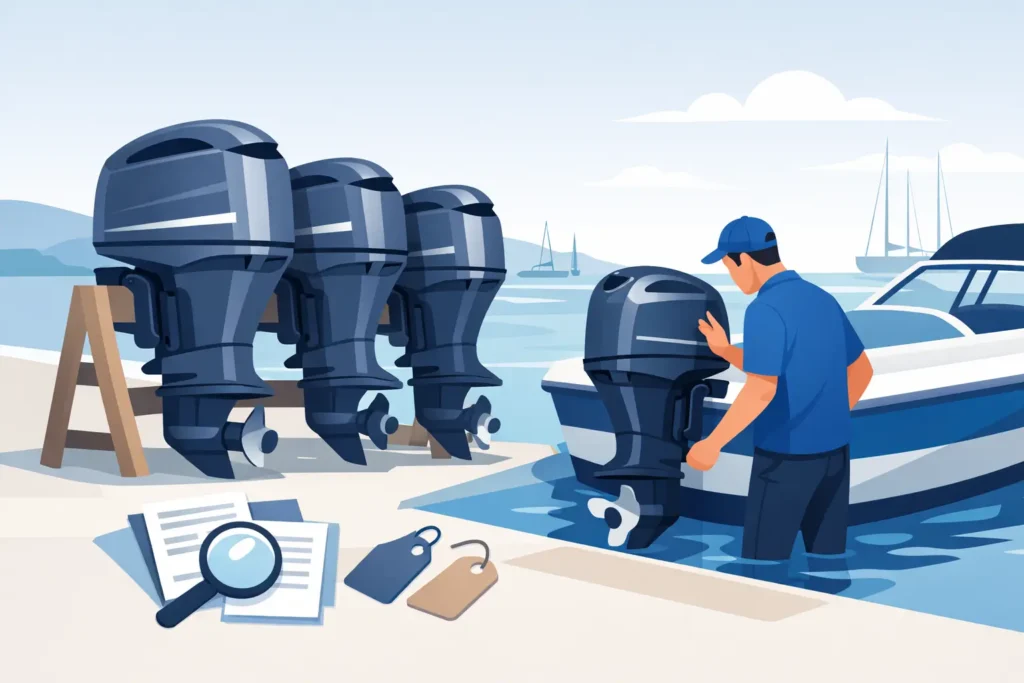
A used Yamaha outboard can save you thousands, but only if you buy the right motor the first time. If you are researching how to buy used Yamaha outboard motors, the real job is not finding the cheapest listing. It is finding an engine with the right history, the right condition, and the right setup for your boat so you do not pay twice.
Used outboards move fast when pricing is good, especially in popular ranges like 115 HP, 150 HP, 200 HP, 225 HP, and 250 HP. That makes it easy to rush. Bad idea. A lower price means nothing if the powerhead is tired, the lower unit has damage, or the motor is missing controls and rigging that cost a lot to replace.
How to buy used Yamaha outboard without overpaying
Start with the total package, not just the engine tag. Buyers often focus on horsepower, year, and sticker price, then get surprised by extra costs for controls, prop, gauges, harnesses, steering compatibility, and shipping. A used outboard that looks cheap can become expensive fast if it comes as a bare engine.
The smarter move is to compare complete value. Ask what is included, what is missing, and what condition each part is in. If one seller is slightly higher in price but includes clean rigging, updated controls, and verifiable service history, that deal can beat a cheaper engine with unknowns.
Yamaha outboards hold value for a reason. Parts availability is strong, resale demand stays high, and many buyers trust the brand for reliability. But used is still used. Condition matters more than brand reputation.
Match the motor to the boat first
Before you inspect any listing, confirm your target specs. Horsepower, shaft length, weight, steering type, and rigging requirements all need to fit your hull. A 25-inch shaft when your transom needs 20 inches is not a bargain. Neither is a heavier engine that changes how the boat sits and performs.
Also check your intended use. A recreational owner may be fine with an older mechanical-control 4-stroke if the price is right. A guide, commercial operator, or buyer who runs long hours may want newer fuel injection, cleaner rigging, and stronger service records even at a higher price.
What to inspect before you buy
Pictures help, but they do not replace real inspection details. If you cannot see the engine in person, ask for very specific photos and videos. You want cold start footage, idle footage, tell-tale water flow, cowling-off photos, lower unit close-ups, prop shots, and serial information.
The basic areas to check are straightforward. Engine hours matter, but hours alone do not tell the whole story. A higher-hour motor with proper maintenance can be a better buy than a low-hour engine that sat for years with stale fuel and poor storage.
Service history and proof of care
Ask for maintenance records right away. You want to know when the oil was changed, when water pumps were serviced, whether thermostats were replaced, whether gear lube was inspected regularly, and if any injector or fuel system work was done. On a 4-stroke Yamaha, this history adds real value.
If the seller has no records, that does not automatically kill the deal, but it should change your price expectations. No records means more risk. More risk means a lower number.
Compression and running condition
Compression numbers matter because they give you a quick read on internal engine health. You are not just looking for high numbers. You want consistency across cylinders. A big spread can signal wear or damage.
If compression data is not available, ask for it. If a seller avoids the question, take that seriously. On a used outboard, transparency is part of the product.
A running video should show cold start behavior, idle quality, smoke level if any, warning alarms, and throttle response. Hard starting, rough idle, excessive vibration, or irregular sounds are not small details. They are buying signals in the wrong direction.
Corrosion and saltwater exposure
Many used Yamaha outboards have lived in saltwater, and that is not always a problem if the engine was flushed and maintained correctly. What you are watching for is neglected corrosion. Check the bracket, mounting hardware, lower unit, trim system, and any exposed fasteners. Heavy white buildup, flaking metal, frozen bolts, or corroded electrical connections can turn a simple service job into an expensive one.
Remove the cowling if possible. Corrosion inside the engine area tells you a lot about how the motor was treated.
Lower unit and prop
The lower unit deserves close attention because repairs there add up fast. Look for cracks, welded areas, leaking seals, impact marks around the skeg, and damage near the prop shaft. A beat-up prop may only mean the prop needs replacement, or it may hint that the engine struck underwater objects.
Ask whether the gear lube was checked and whether there was any sign of water intrusion. Milky gear oil is a warning. So are metal flakes.
Price depends on more than year and horsepower
Used outboard pricing is rarely clean and simple. Two Yamaha 150s from the same year can have a big price gap based on hours, condition, freshwater versus saltwater use, included rigging, and seller credibility. That is why buyers who shop only by headline price usually miss the real value.
A good deal is one where the condition supports the price and the setup fits your boat without major extra spending. If you need controls, gauges, prop, cables, and install parts, calculate that before making an offer. Those costs can wipe out the discount you thought you were getting.
When a low price is a red flag
Sometimes the deal is real. Sometimes the engine is priced low because it has hidden issues, missing paperwork, unknown hours, or expensive rigging gaps. If the seller cannot verify the model details, service history, or ownership status, slow down.
Pay attention to vague wording like runs great, good condition, or serviced recently without proof. Specific answers sell engines. Vague answers sell problems.
Buying from a dealer vs a private seller
A private seller can offer a lower price, but there is usually less backup if something goes wrong. You may get fewer records, no inspection support, and no help with shipping or setup questions. That can still work for experienced buyers who know exactly what they are looking at.
A dealer usually prices higher, but you may get better verification, cleaner inventory, help matching horsepower to your boat, and clearer communication on what is included. For many buyers, especially those shopping higher horsepower ranges, that support is worth money. Yamaha Motor Shop, for example, serves buyers who want value pricing but still need direct answers on inventory, horsepower options, and purchase details.
Questions that save you money
Before you commit, ask direct questions and expect direct answers. What is the exact model and serial number? How many hours are on the engine? Freshwater or saltwater use? Any major repairs? Compression readings? Does it include rigging, controls, gauges, prop, and harness? Has it been tested recently?
You also want to ask why the motor is being sold. Upgrading boats is normal. Repowering is normal. Evasive answers are not.
How to buy used Yamaha outboard online with less risk
If you are buying remotely, details become even more important. Ask for timestamped videos, serial photos, and a full list of included components. Confirm freight terms, crating, payment method, and damage procedure before money changes hands.
Do not assume anything is included unless it is stated clearly. Online buyers get into trouble when they think a listing includes controls or a prop and it does not. Get the full package in writing.
It also helps to ask what the seller recommends replacing at install. Honest sellers will tell you if the engine needs fresh service items, updated fuel lines, or rigging changes before it hits the water.
The best used Yamaha outboard is not always the newest one
Some buyers overpay because they chase the newest year available. Newer can be better, but not if the engine was poorly maintained or mismatched to the boat. A slightly older Yamaha with strong compression, clean corrosion profile, solid service records, and complete rigging can be the smarter buy.
That is really the answer to how to buy used Yamaha outboard motors without regret. Buy condition. Buy fit. Buy documented value. The right used outboard should save you money upfront and stay affordable after install, not create a repair list before your first trip.
If a motor checks the boxes on history, inspection, rigging, and price, move quickly. Good used inventory does not sit long, and the best deals usually go to buyers who ask the right questions before someone else does.