
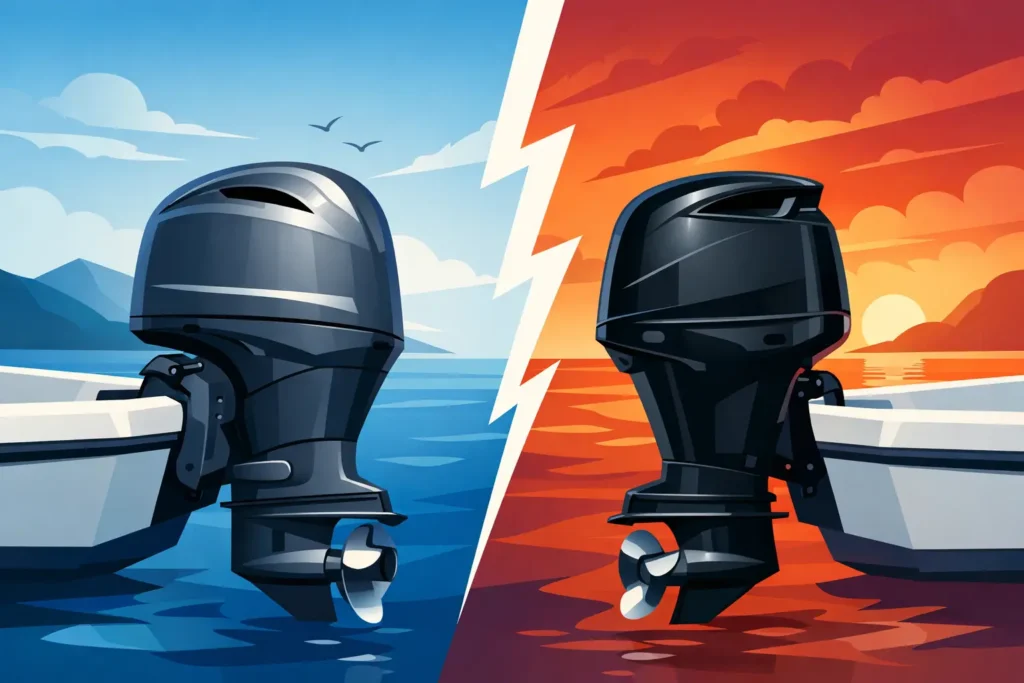
When buyers compare yamaha vs suzuki outboards, they usually are not asking which brand is good. Both are good. The real question is which one makes more sense for the boat, the workload, and the budget right now. If you are replacing a failed motor, repowering an older hull, or trying to get the best value in a 115 HP to 250 HP range, the small differences matter.
This is where brand reputation stops being enough. A weekend bay boat owner, a guide running long hours, and a small commercial operator do not buy for the same reason. One may care most about resale. Another may care about upfront price. Another may need proven dealer familiarity and easy parts access. That is why the better buy depends on how you actually use the motor.
Yamaha vs Suzuki outboards by buyer priority
Yamaha has a strong hold with buyers who want broad market trust, consistent resale value, and a motor that is easy to move later. Suzuki often gets attention from value-focused shoppers because pricing can be more aggressive, especially when a buyer is trying to stay inside a fixed repower budget.
If your first filter is long-term confidence and market demand, Yamaha usually has the edge. If your first filter is getting modern 4-stroke power at a lower purchase price, Suzuki deserves a close look. That is not a knock on either brand. It is just how many real purchases happen.
In the US market, Yamaha also tends to have very strong recognition among used buyers. That can help when you sell the boat or trade the motor later. Suzuki has loyal owners too, but resale conversations often start from a lower number even when the engine condition is similar.
Reliability and long-term ownership
Reliability is where opinions get loud fast, but the truth is more balanced. Both Yamaha and Suzuki build dependable 4-stroke outboards when they are maintained properly. Oil changes, fuel quality, water pump service, corrosion prevention, and storage habits will affect lifespan just as much as the badge on the cowl.
Yamaha’s reputation is built on consistency. Many buyers see Yamaha as the safe choice because the brand has been a default answer for repower projects for years. There is comfort in that, especially if the boat is used hard and downtime costs money.
Suzuki has also earned a strong reliability reputation, especially among owners who prioritize fuel-efficient 4-stroke platforms and who want solid performance without paying top-tier pricing. In many cases, Suzuki reliability concerns come less from the engines themselves and more from local support gaps in certain areas. A good motor with weak service access can still become a frustrating ownership experience.
That is why local parts and service should be part of the comparison. If Yamaha has stronger support where you boat, that matters. If Suzuki service is available and trusted in your area, the gap narrows.
Price matters, and Suzuki often gets the first look
A lot of buyers start this comparison because of money. That is reasonable. Repowering is expensive, and moving from an older 2-stroke to a newer 4-stroke can turn into a bigger project than expected.
Suzuki often appeals to cost-conscious shoppers because it can come in at a lower upfront price point on comparable horsepower. For buyers focused on getting into a dependable 150 HP, 200 HP, or 250 HP setup without stretching the budget, that difference can be enough to make the decision.
Yamaha, on the other hand, often asks for more money upfront, but many buyers accept that because they expect stronger resale and broader buyer demand later. In simple terms, Suzuki may save more on the front end, while Yamaha may give more back on the back end.
That is why the right answer depends on how long you plan to keep the motor. If you keep engines for many years, the lower entry price on Suzuki can look very attractive. If you trade boats often or think about resale early, Yamaha can justify the higher number.
Fuel efficiency and everyday operating cost
Fuel cost adds up quickly, especially for offshore anglers, charter operators, and commercial users. Suzuki has a reputation for strong fuel economy across several horsepower classes, and that is one reason budget-focused buyers keep coming back to the brand.
Yamaha is not weak here, but Suzuki often gets credit for squeezing more efficiency out of some comparable setups. Over a season of heavy use, that can become real money. For light recreational use, the difference may not be large enough to drive the whole decision.
Hull match matters too. A motor that looks more efficient on paper may not be the better performer on your exact boat. Weight, prop selection, load, and operating RPM all change the result. Buyers should be careful about making a final decision based only on published fuel claims.
Performance feel is not always the same
Some buyers want the strongest hole shot they can get. Others care more about quiet cruising, smooth midrange, or how the engine behaves when loaded with passengers, ice, and gear. Yamaha and Suzuki both offer strong modern performance, but they do not always feel identical on the water.
Yamaha is often chosen by buyers who want a familiar, proven power delivery and broad acceptance across many hull brands. There is a practical comfort in buying what many owners, captains, and mechanics already know.
Suzuki often attracts buyers who want a smooth-running 4-stroke with solid efficiency and competitive technology. In some applications, Suzuki can feel like a lot of motor for the money. That value equation is a real selling point.
If possible, the best comparison is not online talk. It is seeing how each engine performs on your hull class with your expected load. A 115 HP bay boat setup is not the same buying decision as a 250 HP offshore repower.
Yamaha vs Suzuki outboards in key horsepower ranges
The comparison gets more practical when you look at common horsepower categories.
In the 115 HP and 150 HP range, many buyers are repowering bay boats, center consoles, and multipurpose fishing rigs. Here, Suzuki can look especially strong for budget-sensitive buyers who want clean 4-stroke power without overpaying. Yamaha remains popular because these are high-volume repower categories, and many owners trust the resale side.
In the 175 HP to 200 HP range, the decision often tightens. These motors sit in a sweet spot for many serious recreational users. Buyers tend to weigh price, support, and future resale almost evenly. Yamaha usually holds its value advantage here. Suzuki stays competitive by offering strong overall value.
In the 225 HP and 250 HP class, total investment becomes large enough that support and long-term confidence start carrying more weight. Buyers spending at this level often want fewer question marks. That can push them toward Yamaha. At the same time, if a buyer is rigging multiple boats or shopping wholesale, Suzuki pricing may create enough savings to change the equation.
New versus used changes the comparison
This part gets overlooked. A new Yamaha versus a new Suzuki is one decision. A used Yamaha versus a used Suzuki is another.
In the used market, Yamaha often has an advantage because demand stays strong. That can be good when selling, but it can also mean paying more upfront for used inventory. Suzuki used models may offer a better deal if condition, hours, and service history are solid.
For budget buyers, this matters a lot. The smartest purchase is not always the cheapest engine or the most recognized brand. It is the motor with the clearest service record, the right horsepower, and a price that still makes sense after rigging and installation costs.
This is also where inventory matters. If a buyer needs a motor now, available stock can outweigh brand preference. Waiting months for one option while a strong alternative is in stock does not always make business sense.
Which brand should you buy?
Buy Yamaha if you want the safer resale play, broad market confidence, and a brand that many buyers and mechanics already trust without much explanation. It often makes the most sense for owners who plan to protect long-term value or who want a motor that is easier to sell later.
Buy Suzuki if price is a major factor, fuel economy is high on your list, and local support is good in your area. It can be the smarter value buy for owners who plan to keep the motor and want modern 4-stroke performance without paying a premium just for the name.
For many shoppers, the decision comes down to three questions. What horsepower do you actually need, how long will you keep the engine, and what support is available where you boat? If you answer those honestly, the better choice becomes clearer fast.
If you are comparing available inventory and trying to stay inside a real budget, that is the time to look beyond brand talk and focus on model year, condition, warranty coverage, and total delivered cost. A good deal on the right horsepower can beat a perfect badge at the wrong price. Yamaha Motor Shop understands that kind of buying decision because most serious outboard shoppers are balancing speed, reliability, and budget at the same time.
The smartest move is to buy the engine that fits your boat, your workload, and your numbers now, not the one that wins the loudest argument at the dock.