
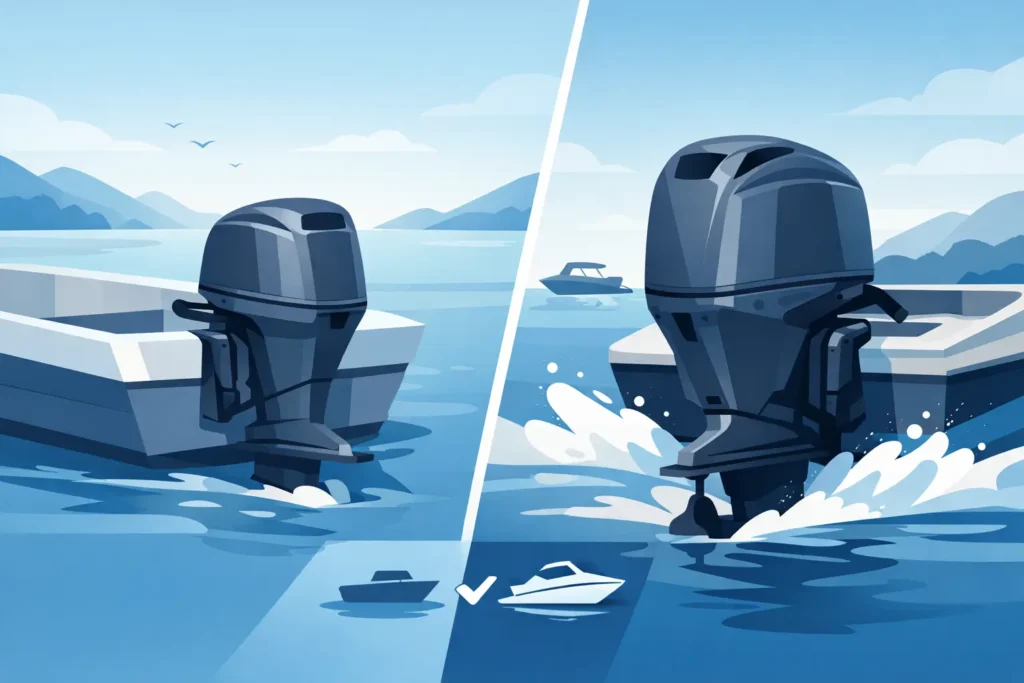
If you are stuck on the 115 hp vs 150 hp outboard question, the real issue is not just top speed. It is whether the motor matches your hull, your normal load, and how hard you expect the boat to work. A 115 can be the smart money choice on the right setup, while a 150 can save you from buying twice if your boat regularly carries more people, gear, or commercial weight.
That is why this comparison matters so much for buyers shopping by price and horsepower. The gap between these two classes is not small on the water, and it is not small in total ownership cost either. If you already know your boat type and what kind of performance you need, the right answer gets a lot easier.
115 hp vs 150 hp outboard for real-world use
On paper, the jump from 115 to 150 horsepower looks simple. In practice, it changes hole shot, cruise comfort, heavy-load performance, and how relaxed the engine feels at working speeds.
A 115 hp outboard usually makes sense for lighter center consoles, aluminum fishing boats, bay boats, pontoons, and some smaller fiberglass hulls that stay within the manufacturer’s recommended range. If your normal day is two or three people, moderate gear, and easy cruising or fishing, a 115 often gives enough power without pushing your budget harder than needed.
A 150 hp outboard starts to make more sense when the boat is on the larger side of its rating, when you carry full crew often, or when you do not want the engine working near its limit every time you leave the dock. That extra horsepower is not only about speed. It helps the boat plane faster, hold plane better in rougher water, and stay more comfortable when loaded with fuel, ice, tackle, or job equipment.
For many experienced buyers, the difference shows up most at midrange. A 150 often cruises with less strain where a 115 may need more throttle to do the same job. Over time, that matters for drivability and owner satisfaction.
Boat size matters more than the badge
The cleanest way to compare these engines is to start with the boat, not the motor. If you put a 115 on a hull that really wants a 150, you may save money up front but give it back in frustration. If you put a 150 on a hull that performs well with a 115, you may pay more than you need to.
For smaller and lighter hulls, the 115 often hits the sweet spot. It keeps weight and cost down, and on many boats it still delivers solid cruise speed and practical performance. This is especially true for buyers replacing an older 2-stroke with a modern 4-stroke and already gaining efficiency, reliability, and smoother operation.
For mid-size boats, the decision gets tighter. A 19- to 22-foot hull can be perfectly happy with a 115 in one layout and feel underpowered with a 115 in another. Beam, dry weight, fuel capacity, transom rating, and how the boat carries load all matter. Two boats with the same length can want very different horsepower.
If your boat is rated up to 150 and you regularly run with passengers or heavy gear, a 150 is usually the safer buy from a performance standpoint. It gives you room to grow into the boat instead of feeling maxed out right away.
When a 115 is enough
A 115 is often the right pick if your priority is value, fuel savings, and everyday usability. It works well for buyers who do not need aggressive acceleration and who run mostly light to moderate loads. It also makes sense for repower projects where keeping transom weight manageable is a concern.
This horsepower range is attractive for budget-conscious owners because the engine price is lower, and in many cases installation and rigging costs stay simpler too. If your use is mostly inland lakes, calm bays, or light recreational fishing, the 115 can be a very efficient answer.
When a 150 is worth paying for
A 150 earns its price when the boat needs it. If your current setup struggles to get on plane, drops off plane too easily, or feels sluggish with a full load, moving to a 150 can change the entire boat. That is especially true for coastal users, charter operators, and owners who do not always have the luxury of perfect water conditions.
A 150 also makes sense if you want stronger resale appeal. Many buyers shopping used boats or repower packages prefer a hull with power closer to the upper end of its rating. It does not guarantee a better sale, but it can make the package easier to move.
Fuel use, maintenance, and total cost
Price matters, but the cheapest engine to buy is not always the cheapest engine to own. That is where the 115 hp vs 150 hp outboard debate gets more interesting.
A 115 will usually cost less up front and generally burn less fuel at wide open throttle. For owners who run long hours at modest cruise speeds, that can be a real advantage. If the boat performs well with a 115, there is no reason to pay for horsepower you will rarely use.
But there is another side to that. If a 115 has to work harder all the time on a heavier hull, the fuel gap can narrow in normal use. A 150 moving the same boat at the same comfortable cruise may not be as expensive to run as some buyers expect, because it does not need to be pushed as hard.
Maintenance between comparable modern outboards in these horsepower classes is often more similar than different. Routine service is routine service. The bigger difference is usually initial purchase cost, insurance considerations in some cases, and possible rigging or prop changes.
For buyers shopping aggressively on price, this is where inventory matters. A discounted new 150 or a clean used 150 can shift the value equation fast. The same is true on the 115 side. If you are buying based on what is in stock and priced to move, the better deal may not be the smaller engine.
Performance trade-offs buyers notice first
Most owners notice three things right away after making the wrong horsepower choice: how fast the boat planes, how it handles a full load, and whether cruise feels easy or forced.
With a 115, the upside is lower cost and often lower fuel burn in the right application. The trade-off is less reserve power. You may feel it when carrying extra passengers, pulling a skier, running against chop, or heading out with a full livewell and heavy gear.
With a 150, the upside is stronger acceleration, more relaxed cruising, and better flexibility if your boating needs change. The trade-off is obvious – higher entry price, and on some smaller boats the extra power may simply be unnecessary.
That is why there is no one-size-fits-all winner. The best engine is the one that fits your actual use, not the one that sounds best in a spec sheet comparison.
How to choose without wasting money
Start with the boat’s maximum horsepower rating and the current performance problem you are trying to solve. If the boat already runs well, planes easily, and does not struggle with your normal load, a 115 may be all you need. If the boat feels lazy, overloaded, or limited every weekend, the 150 is usually the smarter long-term buy.
Think hard about your real operating weight. Include fuel, batteries, electronics, coolers, people, and work gear. Many buyers compare horsepower using dry hull numbers, then wonder why the smaller motor feels weak in actual use.
Also think about where you run. Flat freshwater and short runs are one thing. Coastal water, current, and changing weather can make extra horsepower more valuable than it first appears.
If budget is the top concern, shop by condition and availability as much as horsepower. A well-priced 150 with support and warranty value may be a better buy than an overpriced 115. Yamaha Motor Shop appeals to a lot of repower buyers for this reason – they are looking for horsepower options, price relief, and real inventory instead of wasting time.
Which one should most buyers choose?
If your boat is light, your loads are moderate, and your priority is keeping cost under control, the 115 is often the better value. It gives solid performance for many fishing and recreational setups without pushing the budget higher than necessary.
If your boat is near the upper end of what a 115 can reasonably handle, or if you regularly carry weight and want better all-around performance, the 150 is usually money well spent. It gives more margin, more flexibility, and less chance that you will wish you had gone bigger after one season.
The best move is to buy the smallest engine that fully does the job, not the smallest engine that barely gets by. That is usually where the best value lives, and it is the choice you are less likely to regret later.